………………………………………………………………………………………………………………………………………………………………………………………………………………………………………….
Market Update
………………………………………………………………………………………………………………………………………………………………………………………………………………………………………….
Dear BOC Customer,
We would like to provide an important update regarding current ocean freight market conditions. We are experiencing an extremely tight space situation and significant increases in ocean freight rates beginning June 1st.
The market is being impacted by a combination of increased cargo demand, shrinking vessel capacity due to blank sailings, slow steaming initiatives to conserve fuel, and ongoing global supply chain disruptions related to geopolitical conflicts.
Below are four key reasons driving the recent surge in shipping volume:
Tariff-Driven Front Loading
Importers are pulling cargo forward to avoid potential replacement Section 301 and 232 tariffs expected after the expiration of the current Section 122 tariffs on July 24th. The USTR team, led by Ambassador Greer, along with the Administration, continues to move aggressively toward implementing new tariffs to recover lost duty revenue. In addition, a recent Court of International Trade (CIT) ruling questioning the legality of the Section 122 tariffs has created further urgency among importers to ship early.
Rising Manufacturing Input Costs
Suppliers are signaling upcoming product price increases driven by higher energy and manufacturing input costs. As a result, importers are attempting to maximize shipments under existing purchase orders before new pricing takes effect.
Traditional Peak Season Shipping
The annual pre-holiday shipping season is beginning, which traditionally increases overall cargo volumes. While current forecasts suggest a normal peak season, the seasonal increase is adding additional pressure to already constrained capacity.
Stronger U.S. Manufacturing Activity
Recent economic data has shown stronger-than-expected growth in U.S. manufacturing activity, contributing to increased freight demand.
Key manufacturing indicators include:
- The S&P Global U.S. Manufacturing PMI rose to 55.3 in May, the highest reading in approximately four years and well above the 50 level that signals expansion.
- The Chicago Business Barometer (Chicago PMI) surged to 62.7 from 49.2, reflecting strong growth in manufacturing activity, new orders, and production.
- The Richmond Federal Reserve manufacturing survey also showed improvements in shipments, new orders, and employment.
- The Federal Reserve reported that U.S. manufacturing output increased 0.6% in April, continuing a positive production trend.
With these market conditions in mind, we recommend the following:
Book Shipments Early
Please book shipments as far in advance as possible. We are currently seeing many bookings require 2–4 weeks to secure vessel space, with China origins — particularly Ningbo — experiencing the greatest challenges.
Prepare for Continued Rate Volatility
Ocean carriers continue to aggressively manage capacity, and rate increases are being driven directly by carrier pricing actions. Similar to the COVID period, carriers are increasing prices in response to elevated demand conditions to maximize profits.
Communicate Internally
Please advise all internal stakeholders to prepare for longer transit times, reduced schedule reliability, and elevated transportation costs in the near term.
Potential Fourth Quarter Relief
There is potential for lower freight costs later in the fourth quarter due to front-loading activity and slowing economic conditions. However, ongoing uncertainty surrounding tariffs and geopolitical conflicts continues to create a highly fluid market environment.
Please contact your BOC representative with any questions or for additional guidance regarding your shipments.
Thank you,
BOC International
………………………………………………………………………………………………………………………………………………………………………………………………………………………………………….

………………………………………………………………………………………………………………………………………………………………………………………………………………………………………….
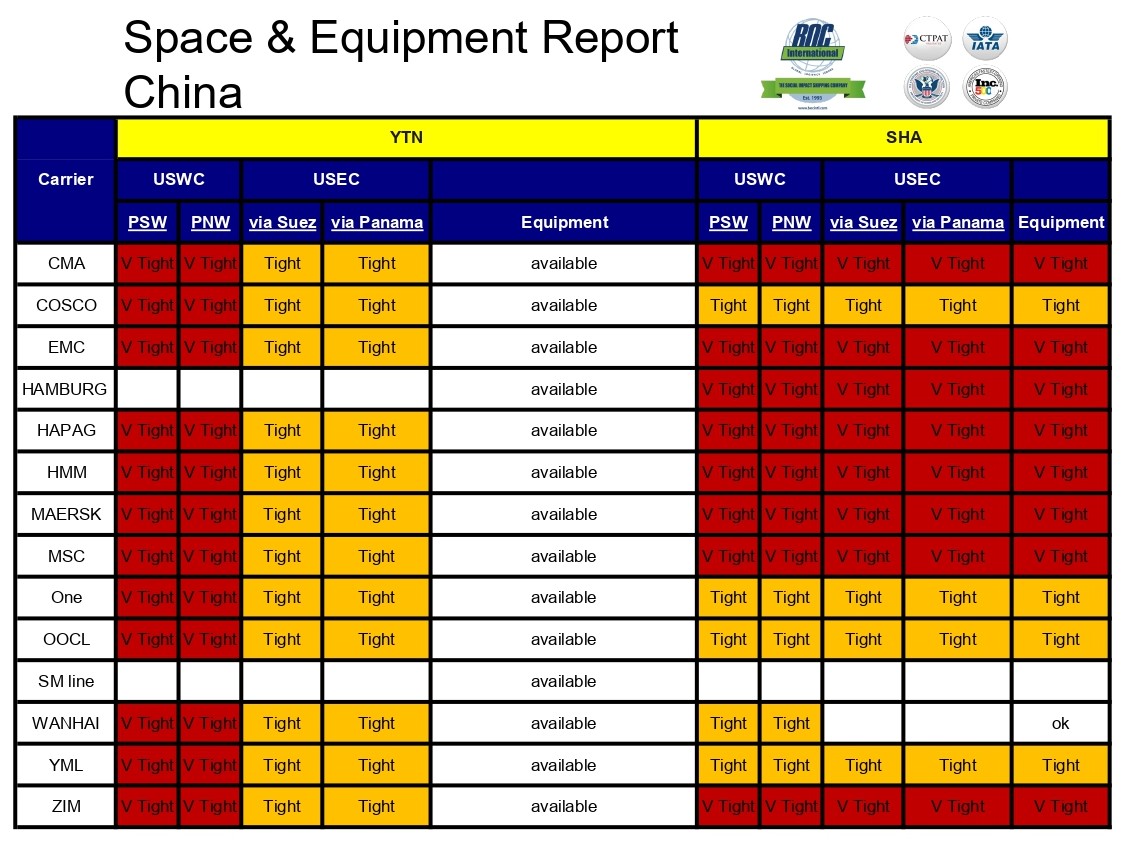
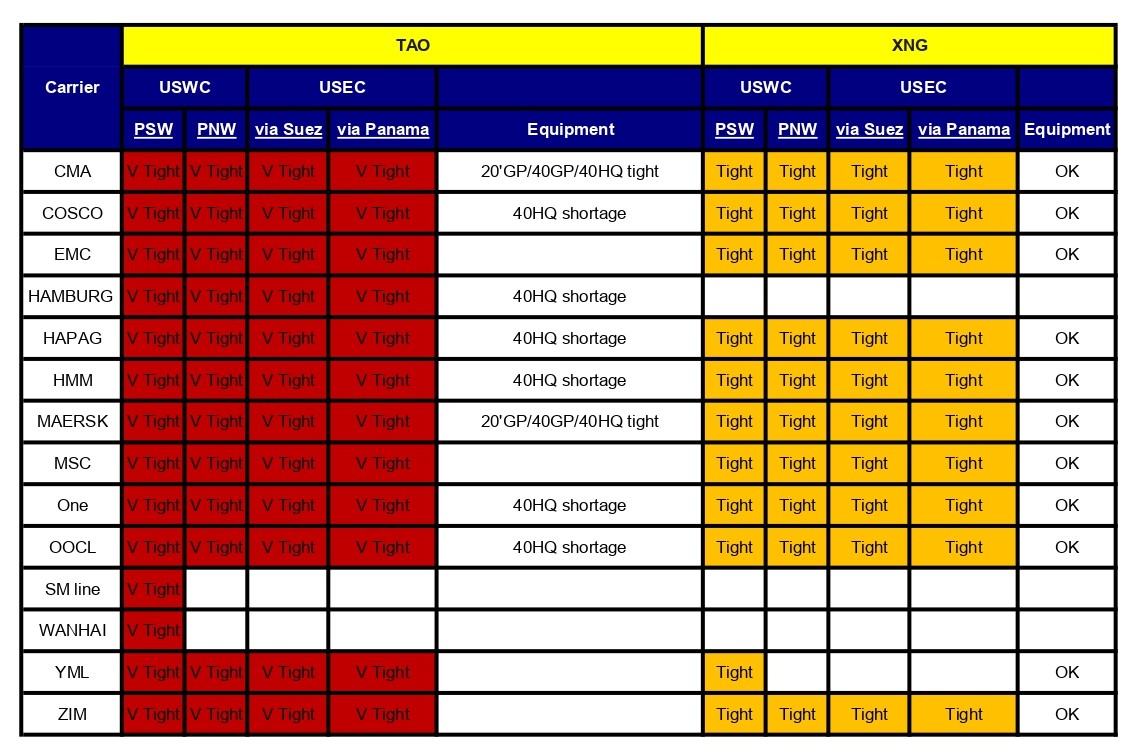
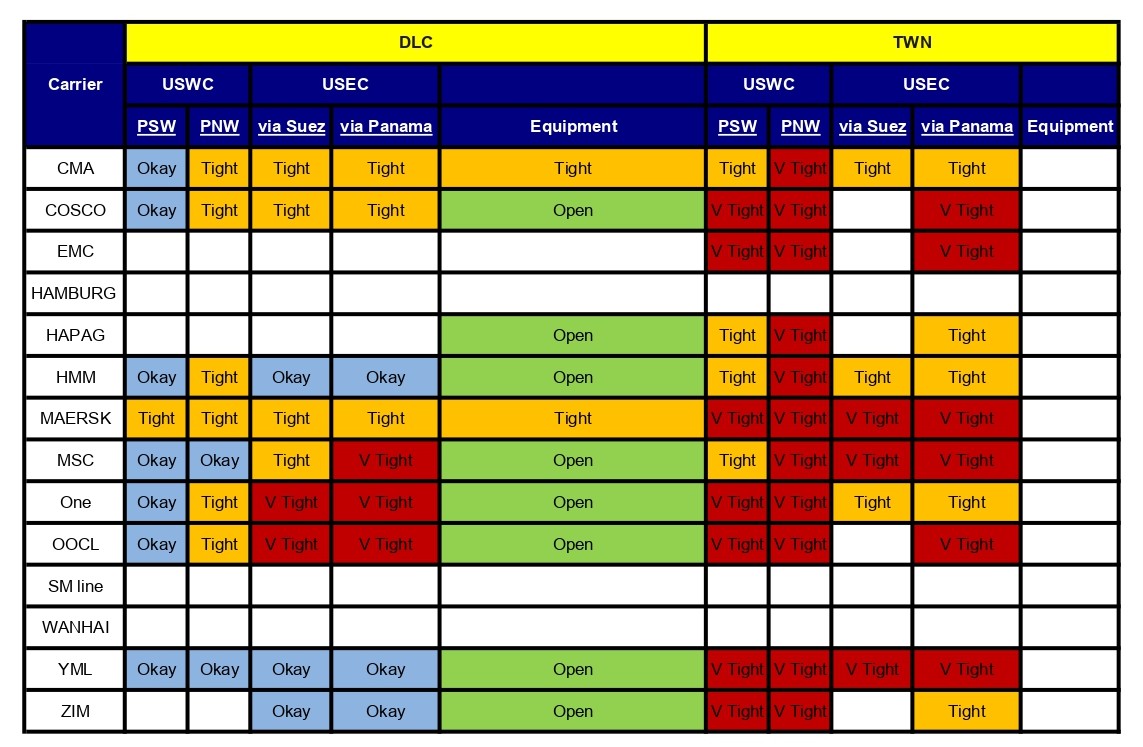
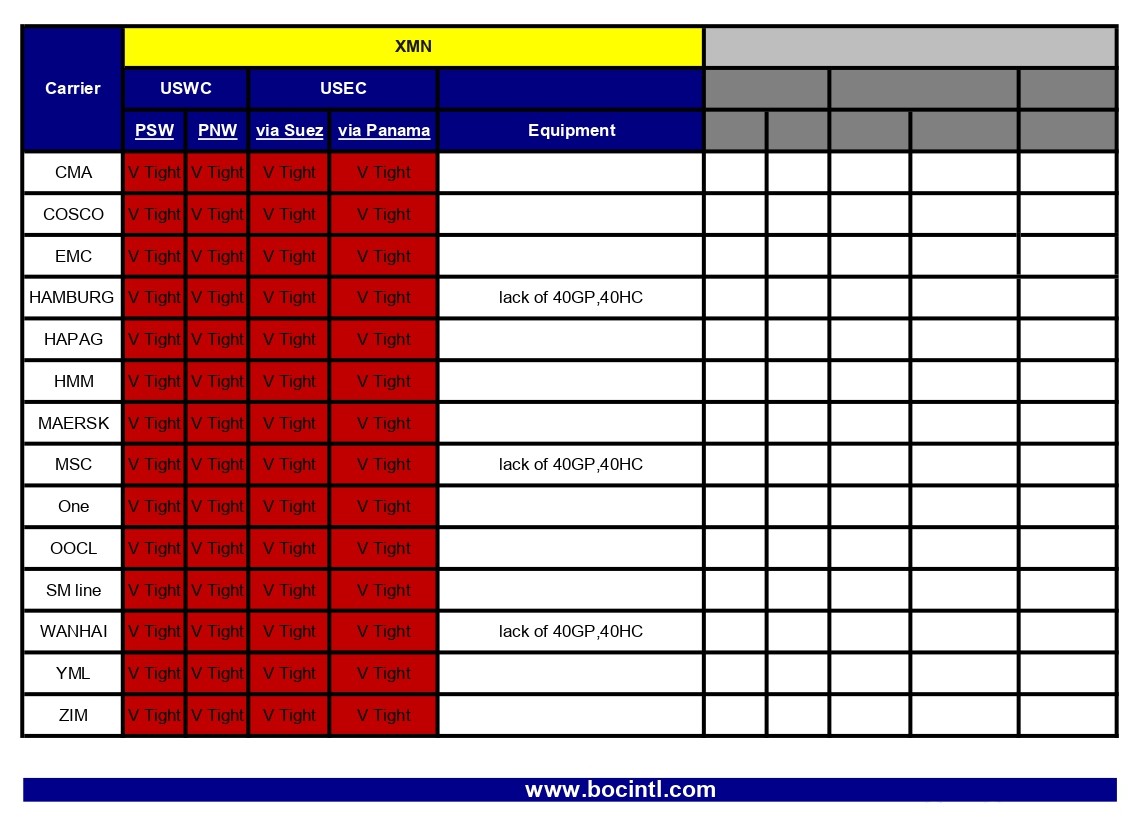
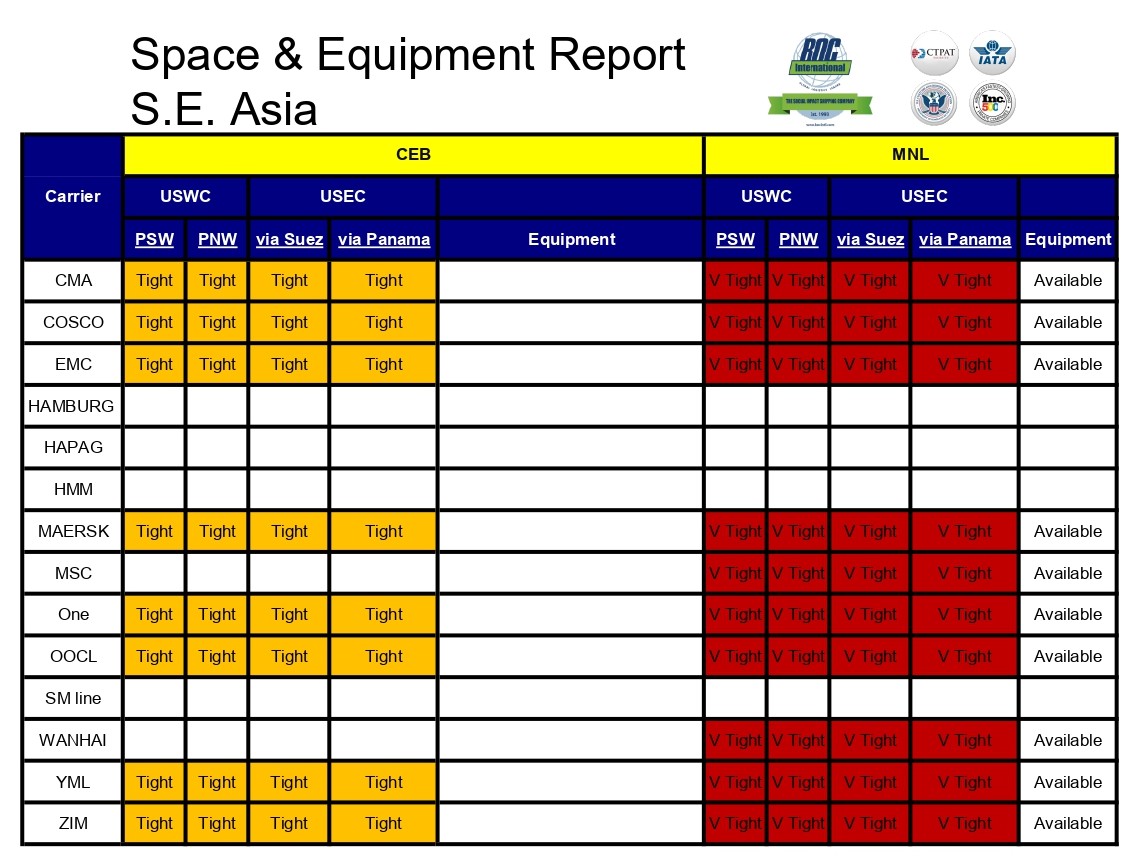
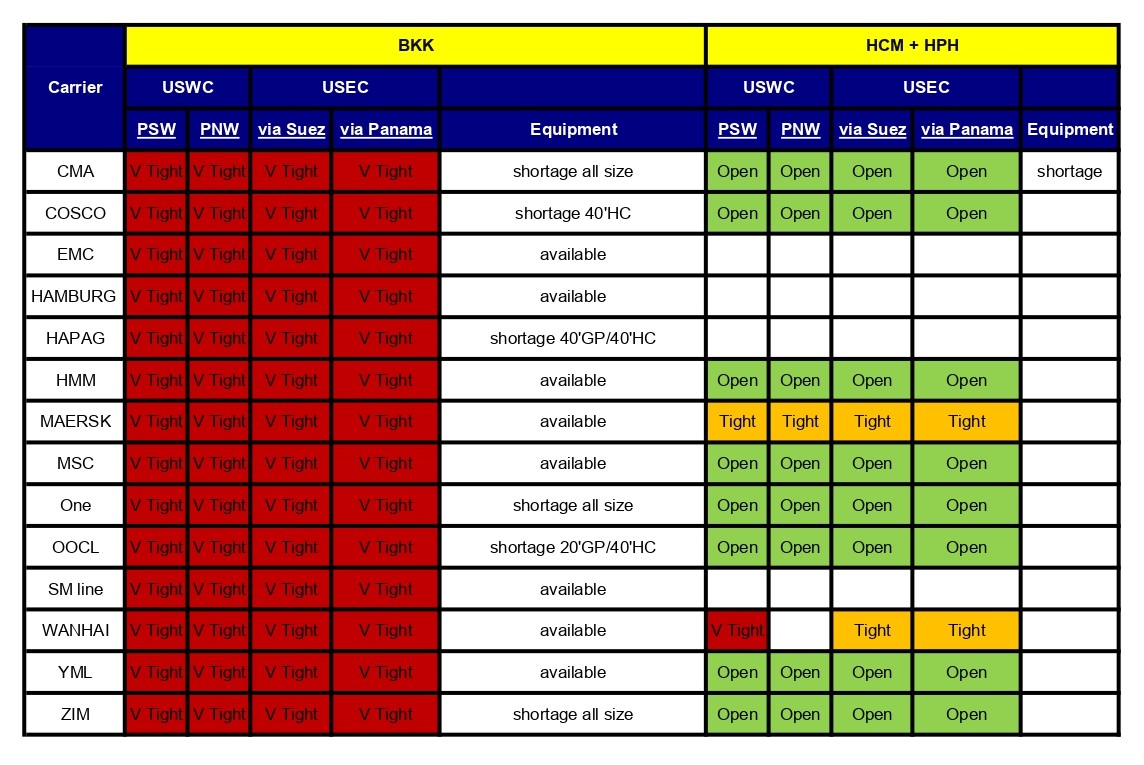
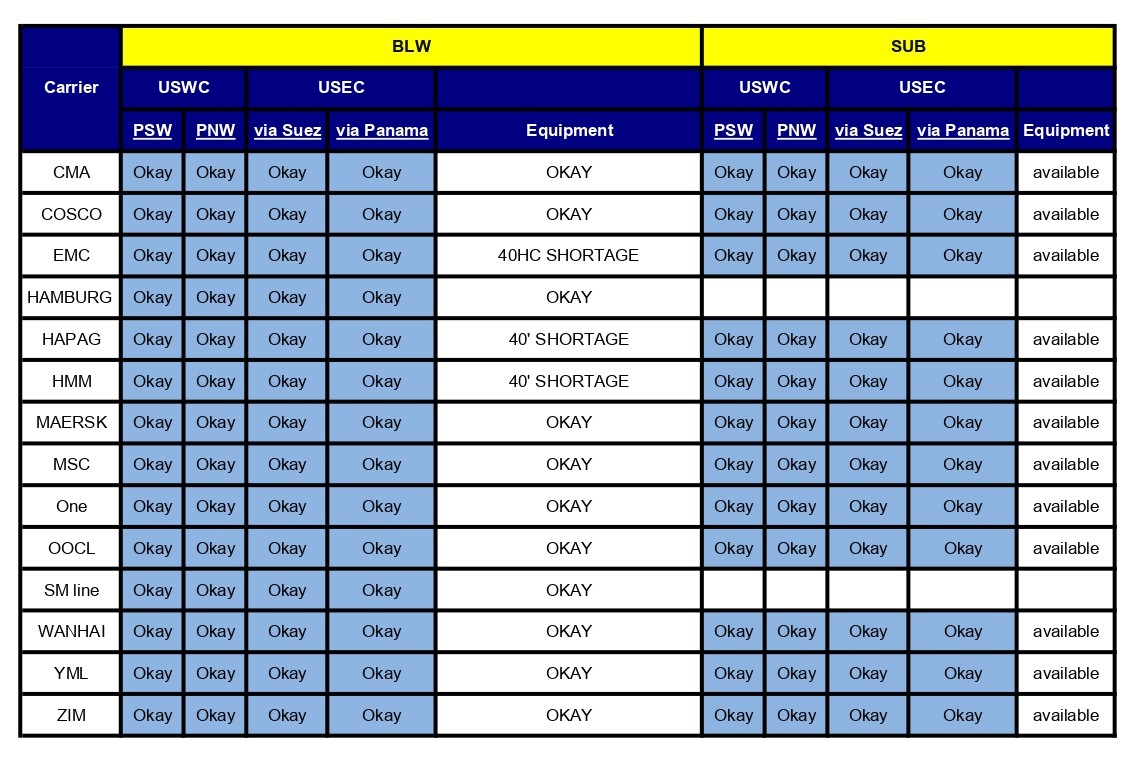
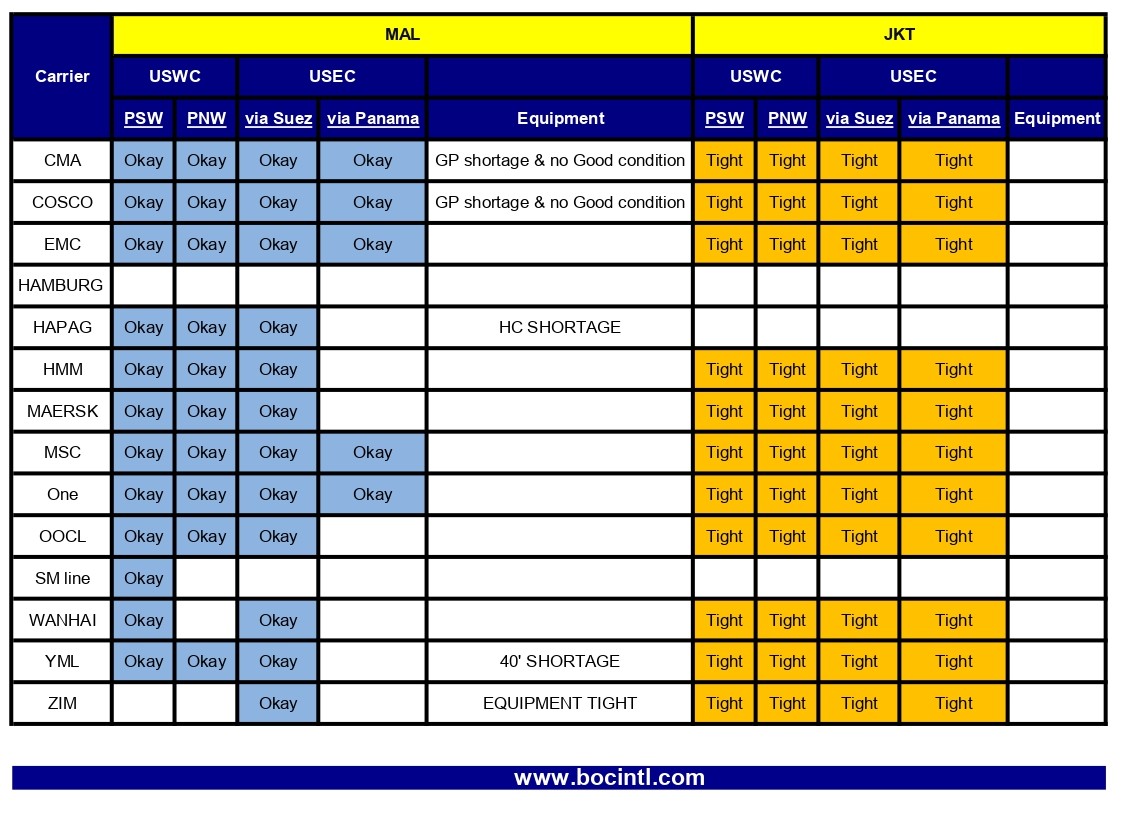
Please find our newest Space and Equipment report, below.
Please note: regardless of the status showing on the report, please reach out to your BOC Representative to discuss existing status. Space availability changes daily, even multiple times per day. This report is just a general guideline. We will always do everything we can to help you move your freight.
………………………………………………………………………………………………………………………………………………………………………………………………………………………………………….
………………………………………………………………………………………………………………………………………………………………………………………………………………………………………….

………………………………………………………………………………………………………………………………………………………………………………………………………………………………………….

………………………………………………………………………………………………………………………………………………………………………………………………………………………………………….
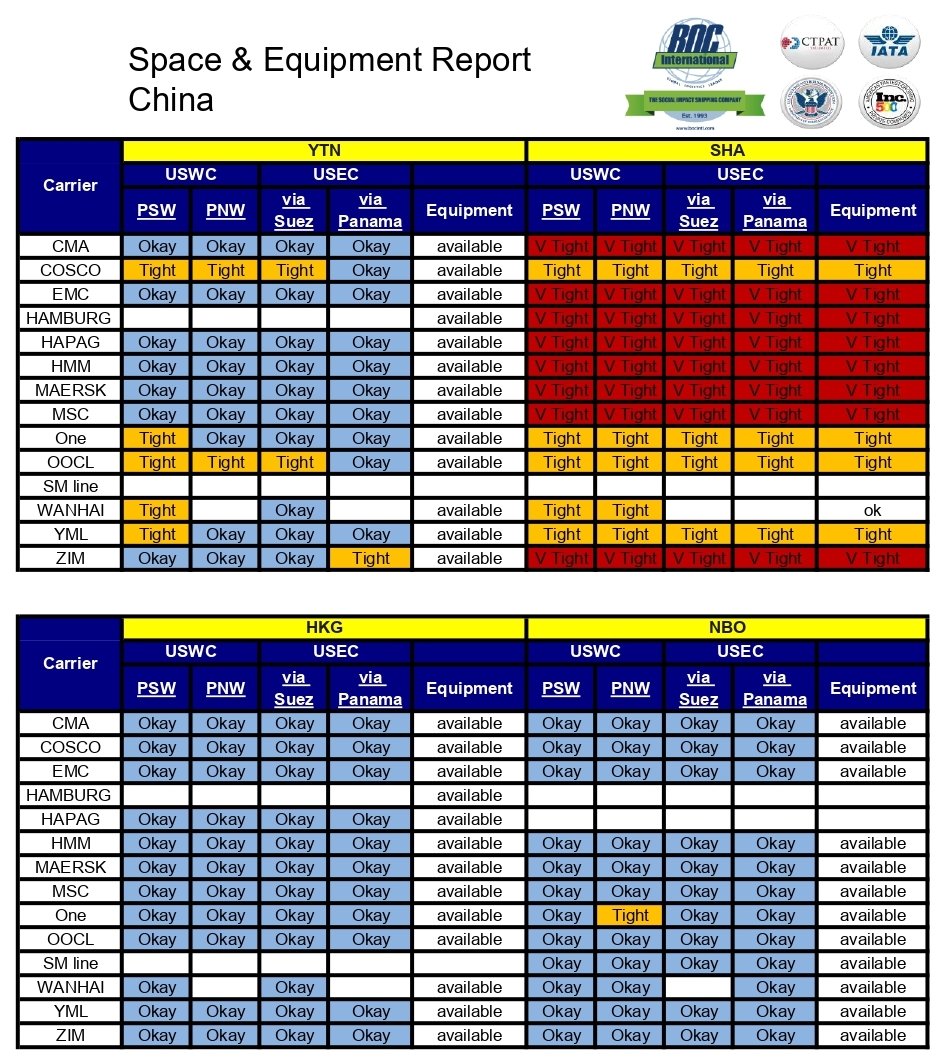
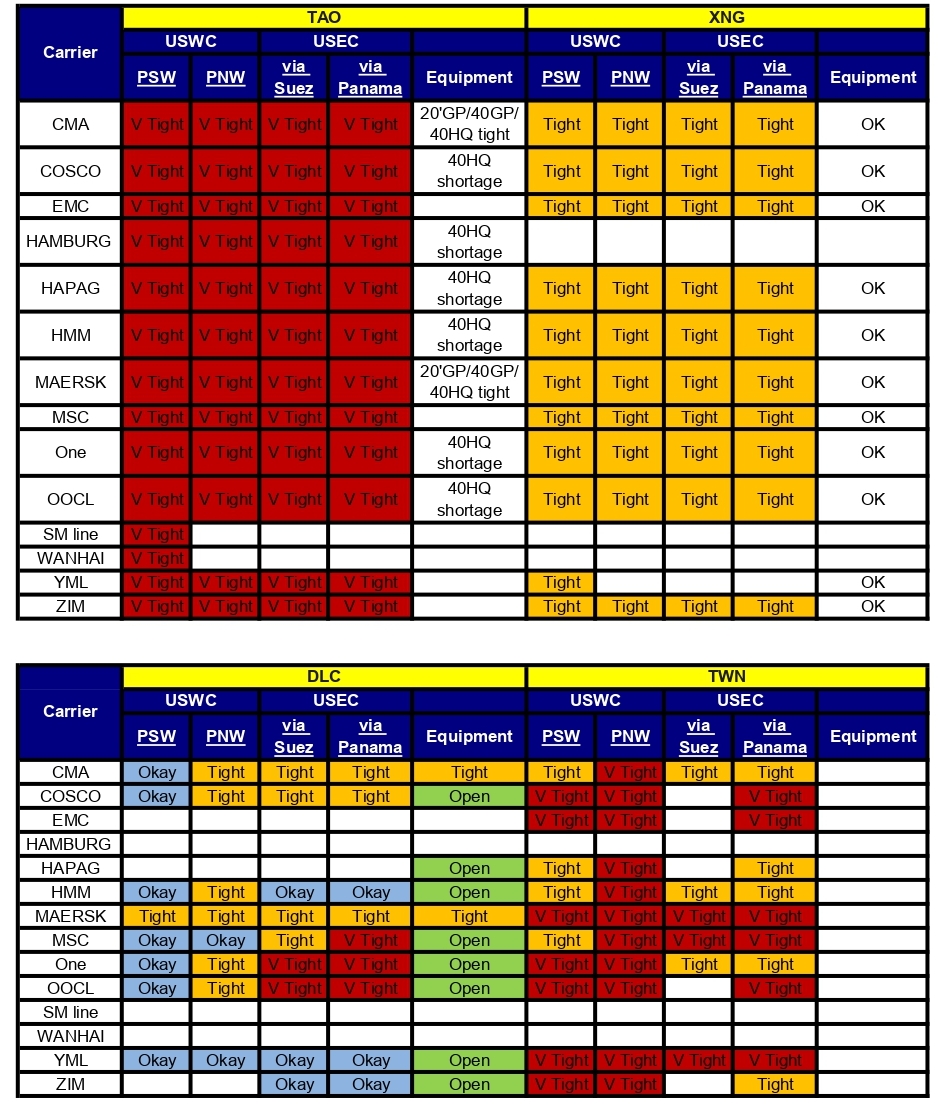
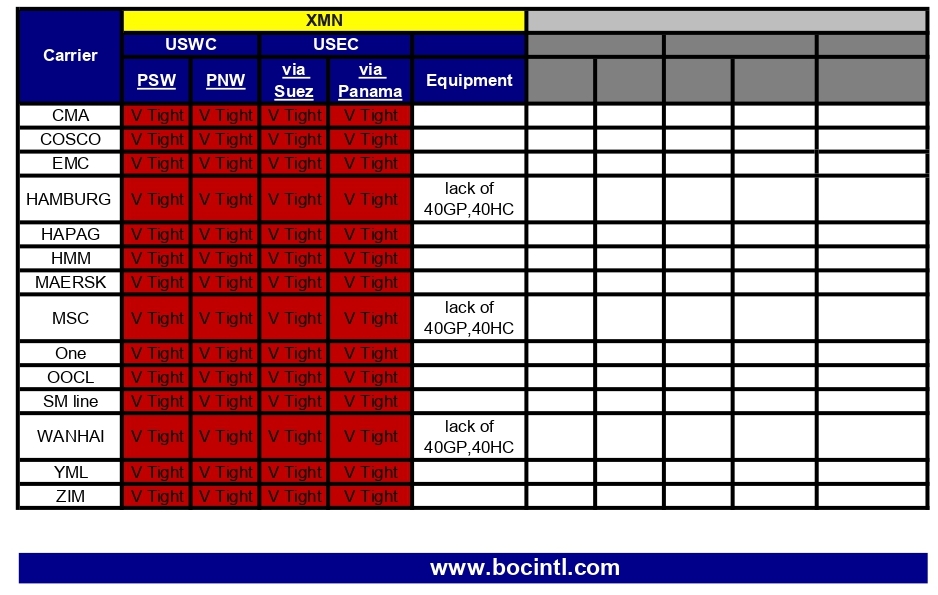
Please find our newest Space and Equipment report, below.
Please note: regardless of the status showing on the report, please reach out to your BOC Representative to discuss existing status. Space availability changes daily, even multiple times per day. This report is just a general guideline. We will always do everything we can to help you move your freight.
………………………………………………………………………………………………………………………………………………………………………………………………………………………………………….
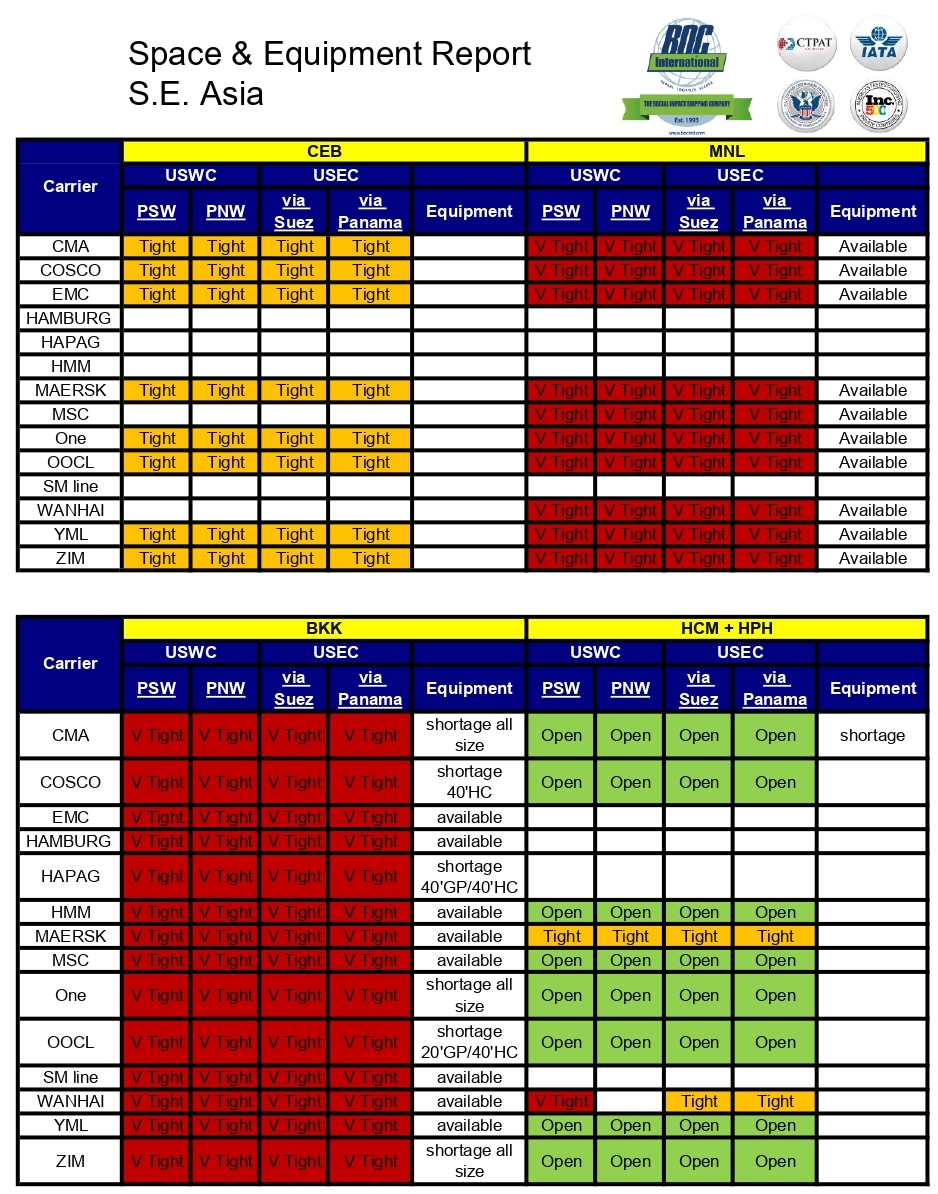
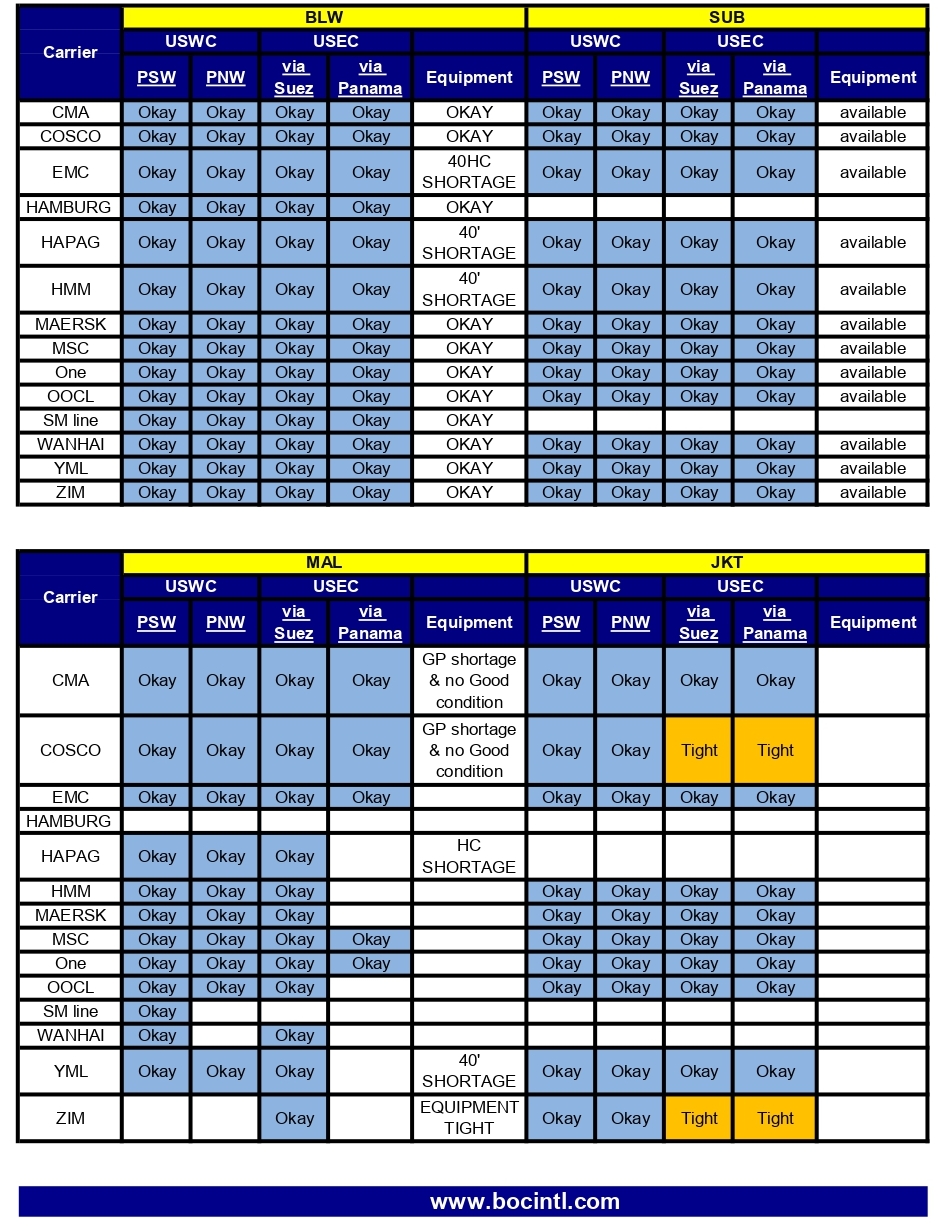
………………………………………………………………………………………………………………………………………………………………………………………………………………………………………….
………………………………………………………………………………………………………………………………………………………………………………………………………………………………………….

………………………………………………………………………………………………………………………………………………………………………………………………………………………………………….
Cargo Systems Messaging Service
CSMS # 68634647 – Updated Consumer Product Safety Commission (CPSC) Message Implementation Guide is Now Available
………………………………………………………………………………………………………………………………………………………………………………………………………………………………………….

An updated version of the Consumer Product Safety Commission (CPSC) Message Implementation Guide (IG) is now available and can be found in the Draft Chapters: Future Capabilities section of the CATAIR website: ACE Automated Broker Interface (ABI) CBP and Trade Automated Interface Requirements (CATAIR)
This update includes:
- Updated language related to the OI record to note that “Only one OI record is allowed per HTS code.”
- Added language clarifying the Intended Use Code restriction that applies to disclaims of type B.
If you have any questions about the CPSC IG or message set, please reach out to the CPSC eFiling Support team at EFilingSupport@cpsc.gov.
Related Message Number(s): 68290359
………………………………………………………………………………………………………………………………………………………………………………………………………………………………………….

………………………………………………………………………………………………………………………………………………………………………………………………………………………………………….
Middle East Tensions and Delays
for Container Ships and Airfreight
………………………………………………………………………………………………………………………………………………………………………………………………………………………………………….
Maersk reported that the Port of Salalah was hit by a drone-related security incident on March 28, 2026, damaging a terminal crane and suspending operations. Salalah is open but high-risk for schedule slippage, especially for transshipment cargo tied to Maersk/Hapag-Lloyd/Gemini-type routings, Pakistan/Gulf cargo, or anything affected by the Red Sea/Gulf of Aden/Strait of Hormuz situation. Salalah port is operating, but due to recent regional security incidents and war-related rerouting, carriers are reporting congestion and possible delays. Cargo transshipping via Salalah should be closely monitored for schedule changes, rolled connections, and extended dwell times.
Hormuz disruption continues to trap 79% of vessels
79% of container vessels remain trapped in the Gulf after Hormuz disruption, tightening capacity and raising freight costs
Excerpted from LogisticsMiddleEast.com, by Nathan Baker
May 12, 2026
Fifty three container vessels were trapped inside the Persian Gulf when transits through the Strait of Hormuz became untenable, with 79% still unable to exit two months later, according to Kpler Container Intelligence data.
Only nine vessels have successfully exited the Strait, including two that required a second attempt, while two vessels were seized and one sustained damage. This leaves 42 vessels and associated cargo in prolonged commercial limbo.
Carrier exposure
Carrier level data shows uneven exposure and recovery outcomes across fleets. CMA CGM had 15 vessels in the Gulf but extracted only two, representing an 87% entrapment rate.
MSC recorded the most complex situation with 14 vessels affected, including two seizures, while eight remain inside despite four successful exits.
COSCO achieved the highest relative success, with two vessels exiting on second attempts, suggesting differentiated transit strategies.
Other carriers including Evergreen, Yang Ming, ONE, HMM and Wan Hai recorded zero successful exits, leaving all affected vessels stranded.
Capacity removal tightens
The immobilisation of 53 vessels has removed tens of thousands of TEUs from active rotation, reducing effective capacity while vessels continue incurring fuel and port costs without generating revenue.
For cargo owners, the disruption has shifted from short term delays to forced rerouting. High value cargo has moved via alternative corridors at higher cost, while low margin shipments such as construction materials face extended delays due to limited viable alternatives.
Rerouting shifts congestion pressure
With direct transit suspended, cargo flows have been redirected to alternative hubs including Salalah, Khor Fakkan and other Indian Ocean transshipment ports.
These ports are now operating beyond baseline conditions, with congestion, vessel queues and waiting times increasing as rerouted volumes accumulate.
Service rotations have been restructured to bypass Gulf ports, reducing schedule reliability and forcing carriers to omit calls or redesign routes.
Per Dubai Cargoes
Airfreight in the Middle East has severe service disruptions, including flight diversions, limited capacity and increased rates. Key hubs like Dubai are facing flight holds and capacity caps, while air space restrictions and fuel cost spikes are forcing rerouting and capacity shortages.
As of May 10, Dubai has imposed a one-rotation-per-day cap on foreign airlines — in force through May 31, 2026. Combined with the 39% air cargo capacity reduction caused by Gulf airspace closures, this cap is creating the most severe air cargo constraint Dubai has seen since the pandemic.
………………………………………………………………………………………………………………………………………………………………………………………………………………………………………….

………………………………………………………………………………………………………………………………………………………………………………………………………………………………………….
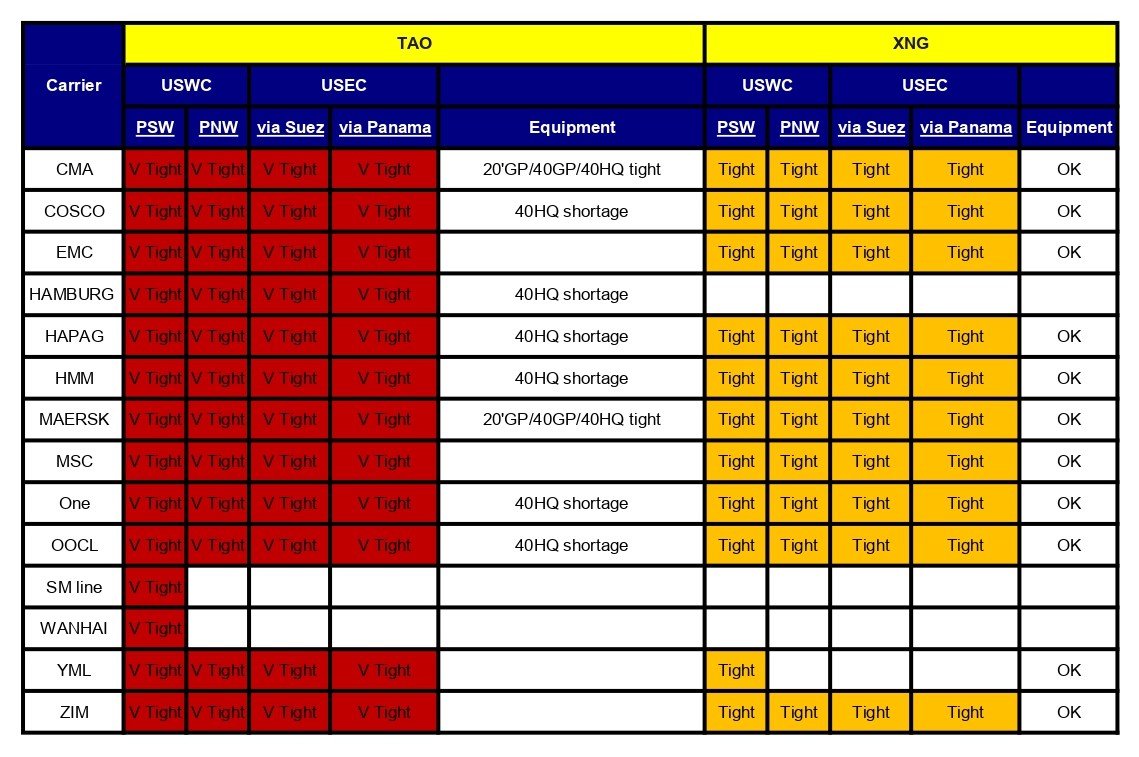
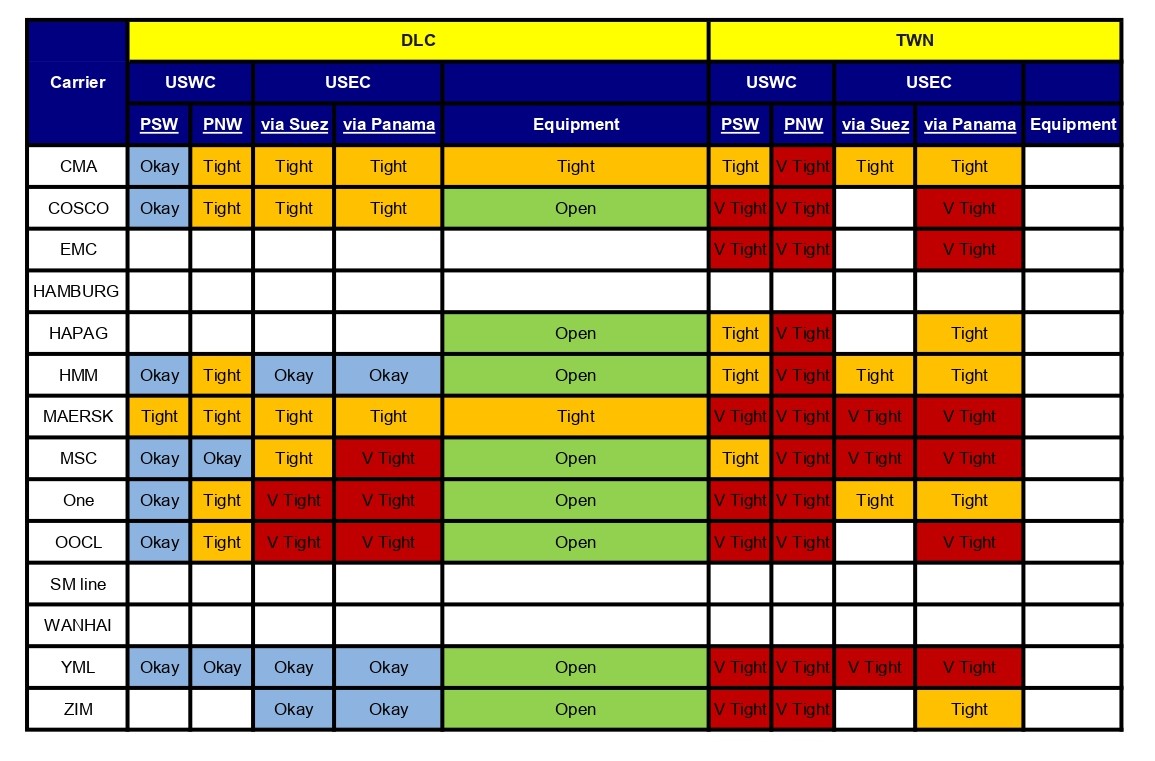
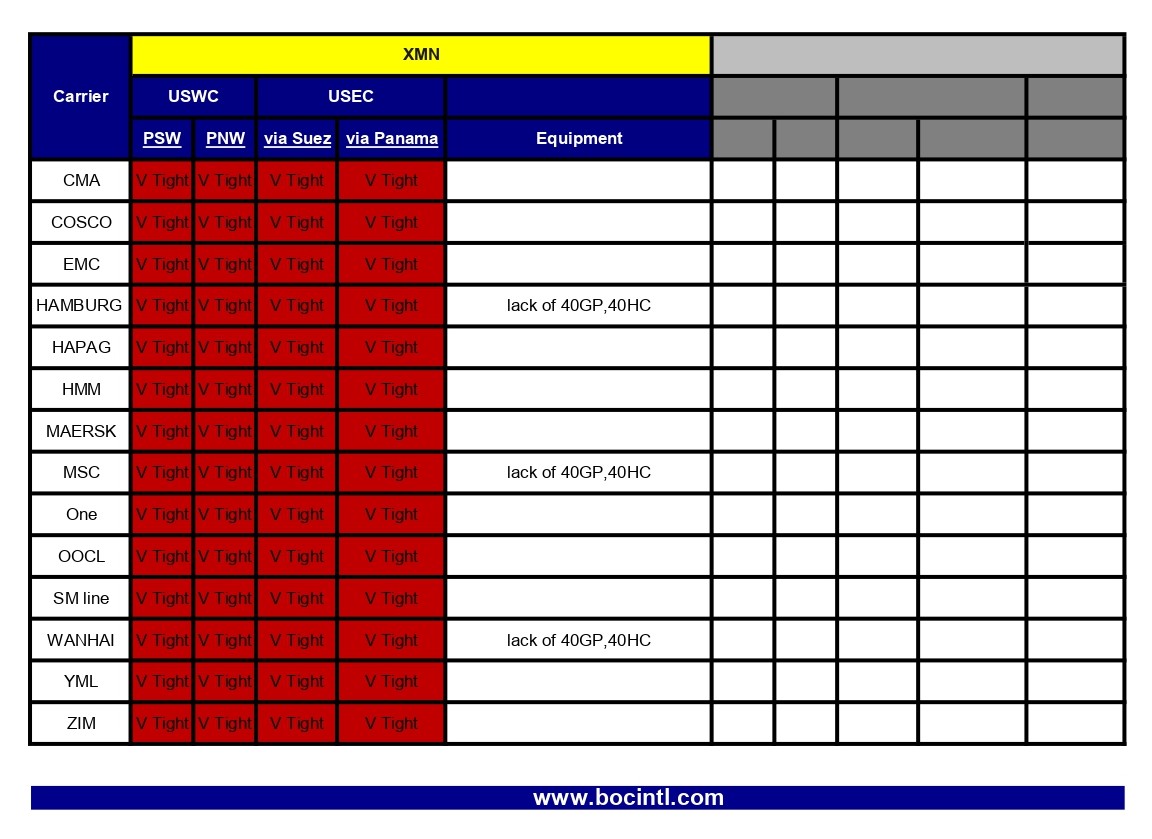
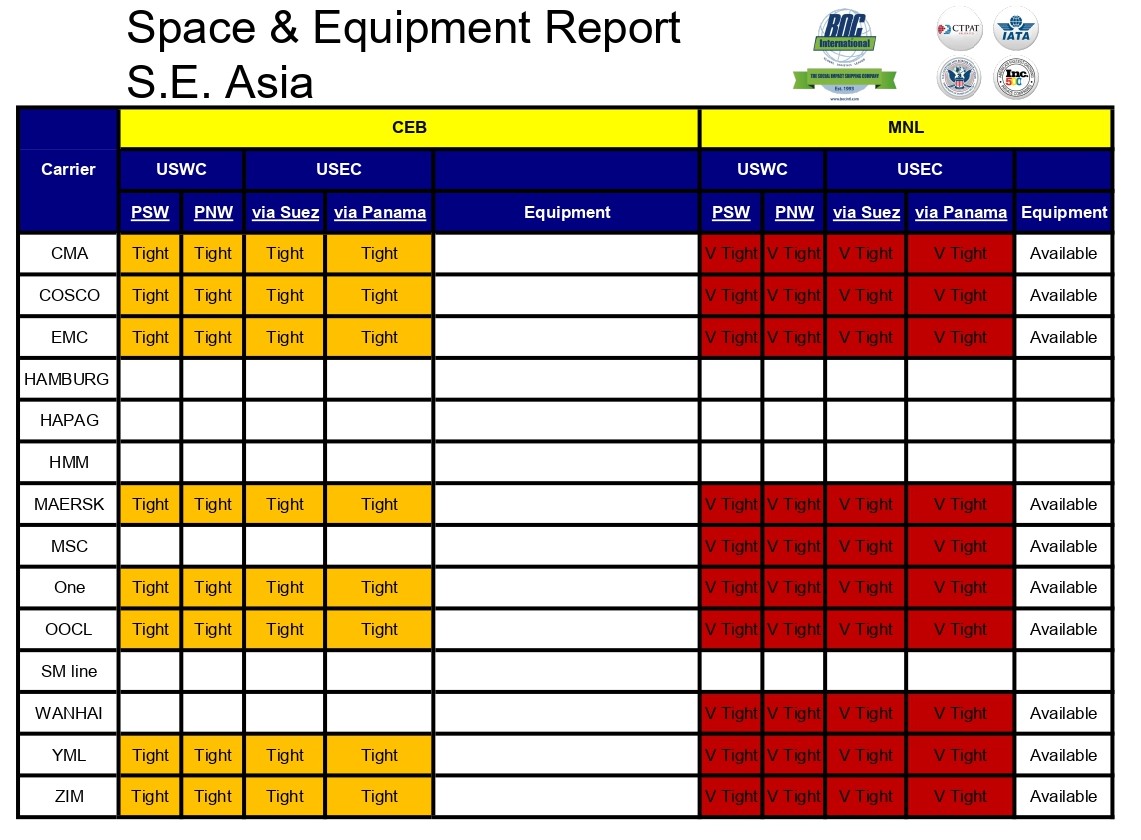
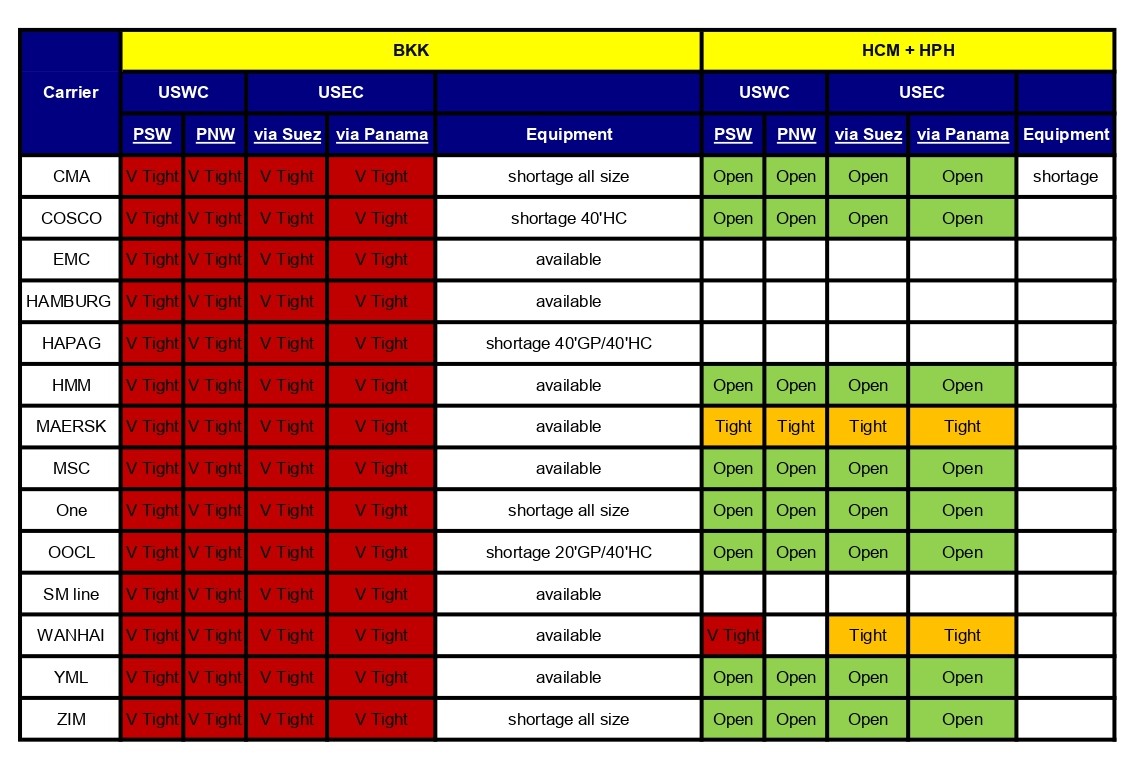
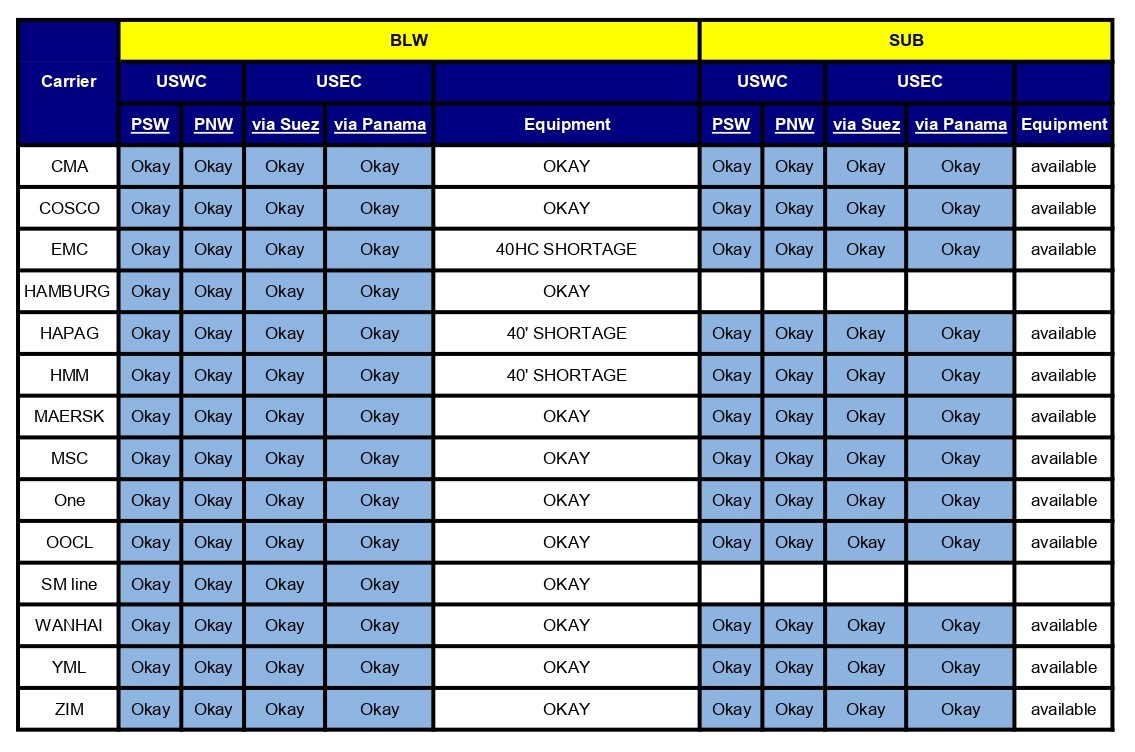
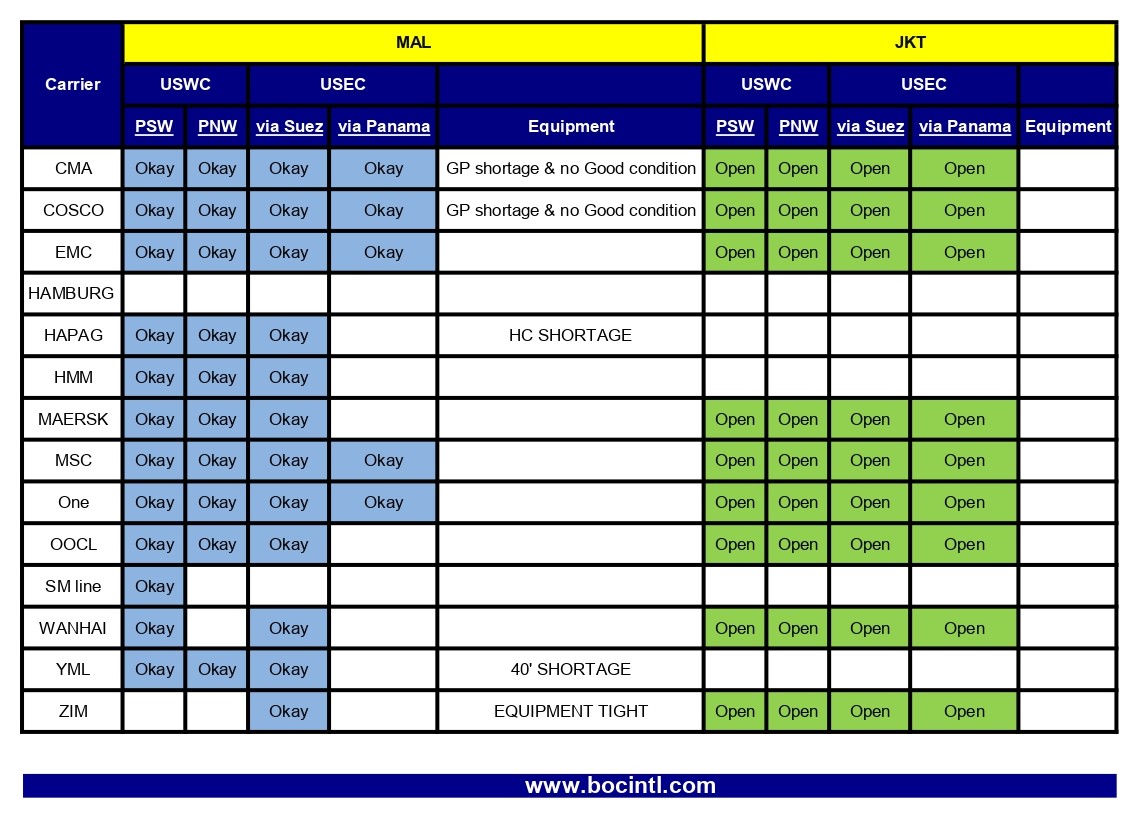
Please find our newest Space and Equipment report, below.
Please note: regardless of the status showing on the report, please reach out to your BOC Representative to discuss existing status. Space availability changes daily, even multiple times per day. This report is just a general guideline. We will always do everything we can to help you move your freight.
………………………………………………………………………………………………………………………………………………………………………………………………………………………………………….
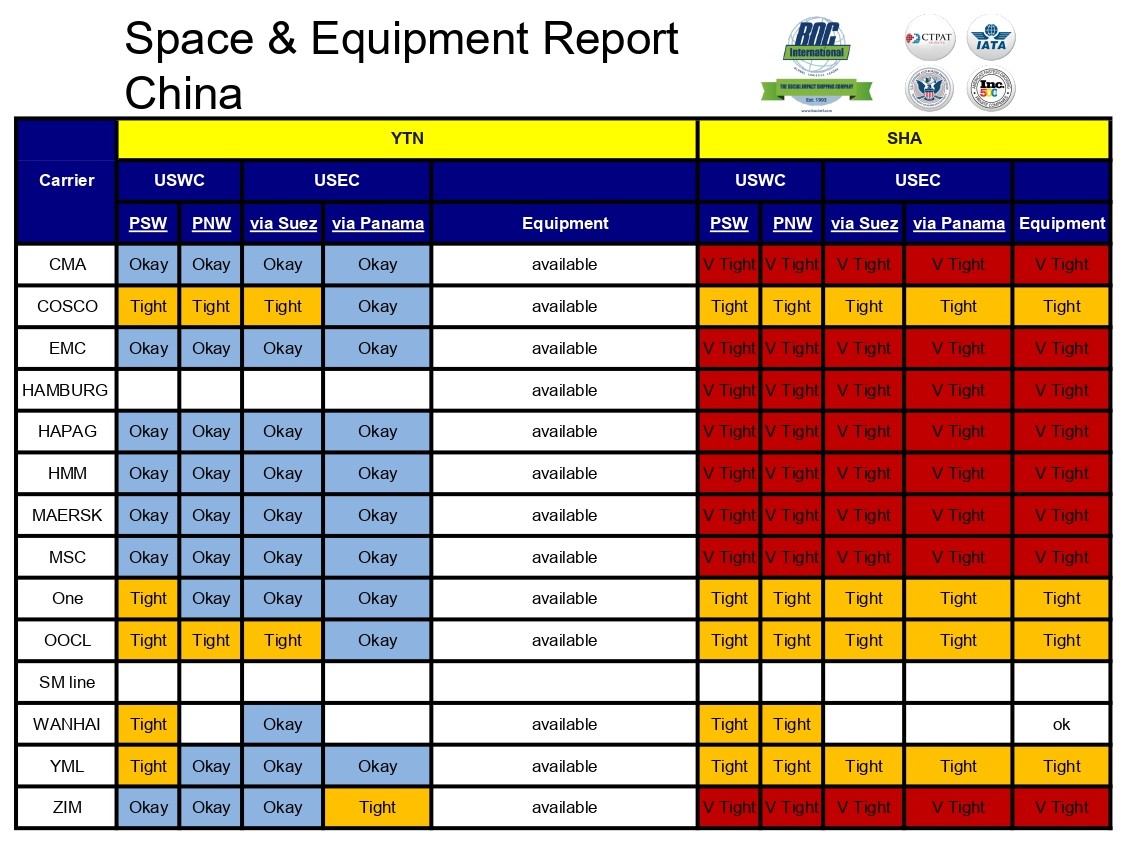
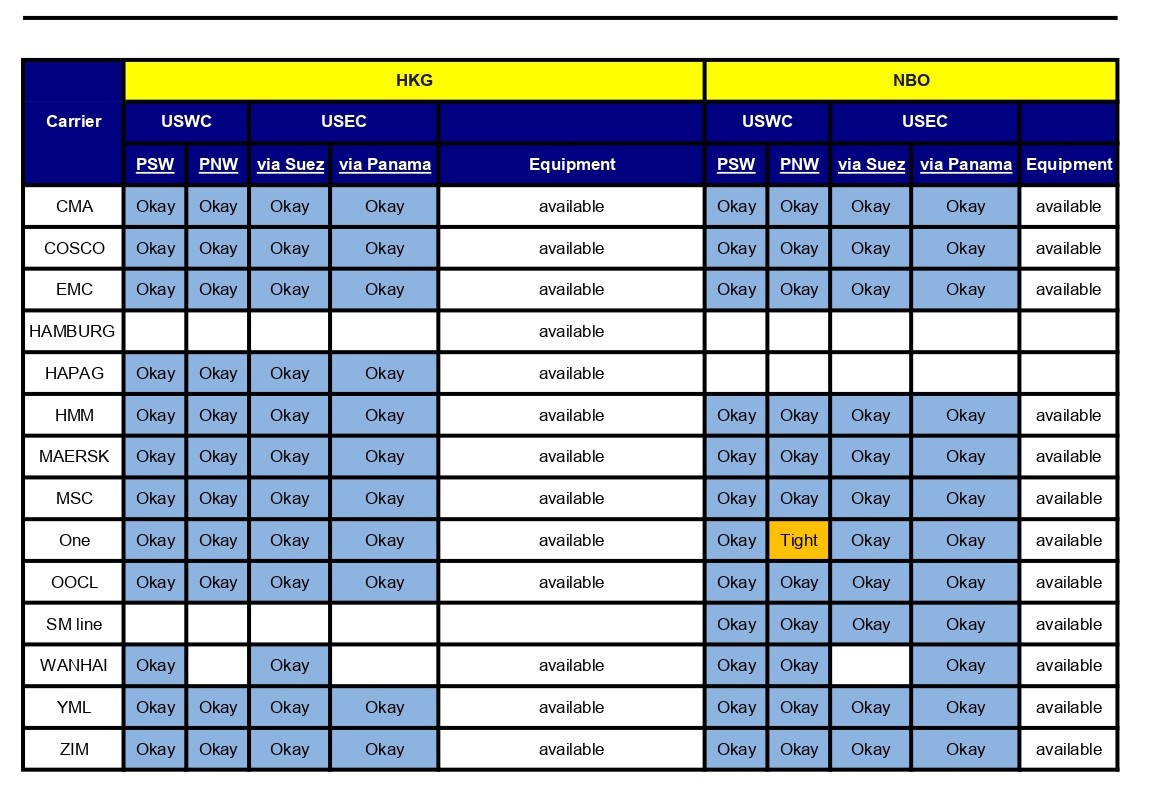
………………………………………………………………………………………………………………………………………………………………………………………………………………………………………….
………………………………………………………………………………………………………………………………………………………………………………………………………………………………………….

………………………………………………………………………………………………………………………………………………………………………………………………………………………………………….
CSMS # 68536553 – CBP Offers Multiple ACE
Reports for Monitoring CAPE Refund Claims
On April 20, 2026, U.S. Customs and Border Protection (CBP) released the Consolidated Administration and Processing of Entries (CAPE) tool in the Automated Commercial Environment (ACE) Portal to streamline the submission and processing of valid refund requests for duties imposed under the International Emergency Economic Powers Act (IEEPA). After CBP review, the U.S. Department of Treasury (Treasury) will issue refunds via Automated Clearing House (ACH). IEEPA refund ACH transactions will begin as early as May 12, 2026. For more information on submitting CAPE Declarations, review CBP’s IEEPA Duty Refunds webpage.
To help the trade community prepare and monitor CAPE declaration submissions, CBP has provided multiple ACE Reports products. Below is an overview of the available reports:
- ES-022: CAPE Entry Summary Report
- This report links CAPE declaration, entry, and refund numbers to help track the refund process and displays refund amounts separated by principal and interest.
- REV-603: Trade Refund Report
- This report enables trade users to track CAPE declarations that have one of the following “Refund Secondary Statuses” after the refund is received by Treasury.
- Sent to Treasury – This status indicates that Treasury has received an approved refund claim.
- Treasury Issued – This status indicates that a refund has been issued.
- Funds Diverted – This status indicates that funds have been diverted for an existing bill. Diversion occurs after liquidation of the entry summary, before the refund is issued.
- Check/ACH Returned – This status occurs when refunds are rejected due to incomplete ACH Refund enrollment.
- For help running this report, review the ACE Reports Trade Refund Report Quick Reference Card (QRC).
- REV-613: ACH Rejected Refunds Report
- This report provides information on refunds that have been rejected due to incomplete ACH Refund enrollment. For help running this report, review the ACE Reports Trade Refund Report Quick Reference Card (QRC).
- For more information about rejected refunds, review CBP’s Replacement Refund Instructions.
- REV-615: CAPE Details Refunds Report
- Building on the REV-603 report, this report provides entry summary-level details associated with CAPE declarations that have been sent to Treasury.
ACE Reports Tips
- Save Time by Scheduling Reports: To minimize processing time, CBP encourages the trade community to schedule recurring reports and get results delivered to an email inbox. For more information, review the Schedule a Report reference guide.
- Use ACE Reports to Identify “4811 Notify Parties”: The following data elements can be added to Entry Summary (ES) reports to identify notify party information:
- CF 4811 Notify Party Name
- CF 4811 Notify Party Number
Support Resources:
- For information on how to access ACE Reports tool, review CBP’s ACE Reports webpage.
- For ACE Reports questions, contact ACE.Reports@cbp.dhs.gov.
- For other IEEPA-related questions, contact IEEPARefunds@cbp.dhs.gov.
………………………………………………………………………………………………………………………………………………………………………………………………………………………………………….