………………………………………………………………………………………………………………………………………………………………………………………………………………………………………….
Next Phase of IEEPA Tariff Refunds to Launch Oct. 6
From: Sandler, Travis & Rosenberg, P.A.
………………………………………………………………………………………………………………………………………………………………………………………………………………………………………….
U.S. Customs and Border Protection recently told the Court of International Trade that it will deploy Phase 3 of its CAPE tariff refund system on Oct. 6. Phase 3 will cover entries that are liquidated more than 80 days and filed by plaintiffs (1) for which the CIT has ordered reliquidation and (2) that submitted a valid importer of record number to CBP by July 30, 2026.
Nevertheless, filing an individual lawsuit at the CIT still appears to be the quickest way to obtain tariff refunds for entries more than 80 days liquidated, including those under protest. The CIT has been entering individual reliquidation orders at a steady clip, and importers can expect to receive a reliquidation order within a week or two of filing suit, if not sooner.
STR continues to advise that IEEPA-only protests (i.e., those that raise no other issues) should not be withdrawn until an importer receives an individual reliquidation order and counsel has verified the importer’s CAPE Phase 3 eligibility with CBP. The most conservative approach would be to wait to withdraw IEEPA-only protests until right before making a Phase 3 submission.
………………………………………………………………………………………………………………………………………………………………………………………………………………………………………….

………………………………………………………………………………………………………………………………………………………………………………………………………………………………………….

………………………………………………………………………………………………………………………………………………………………………………………………………………………………………….
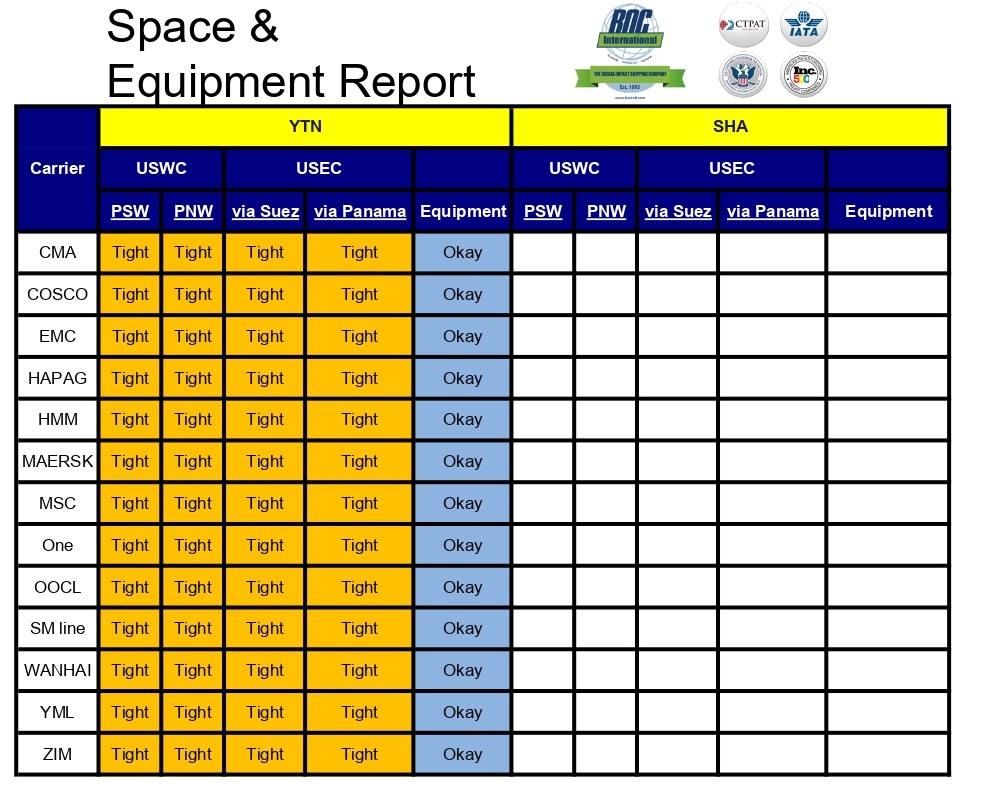
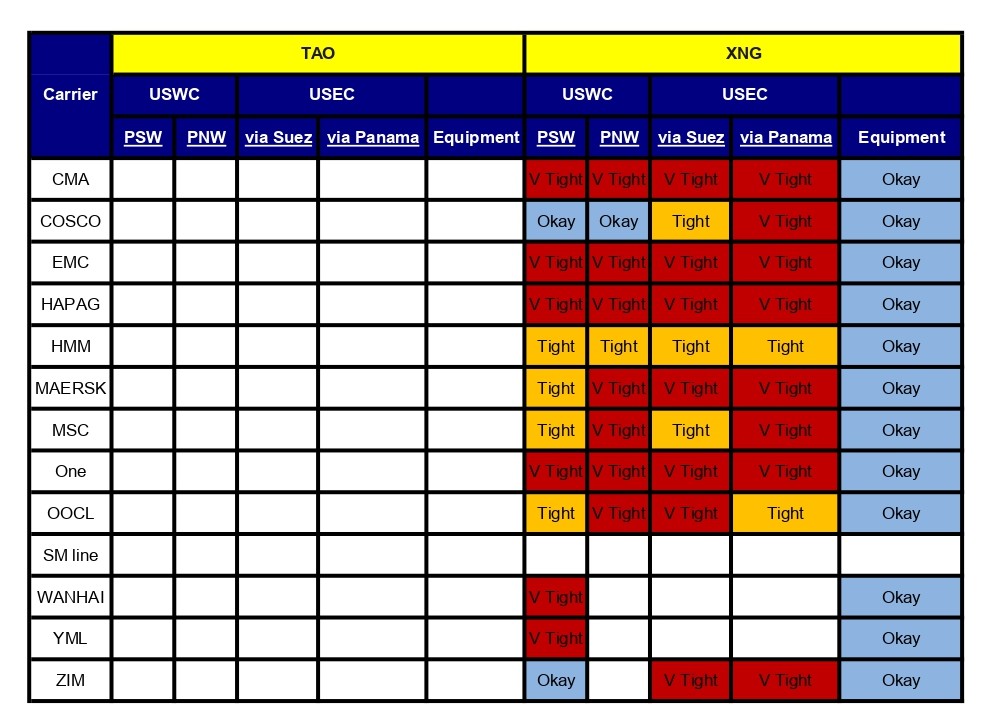
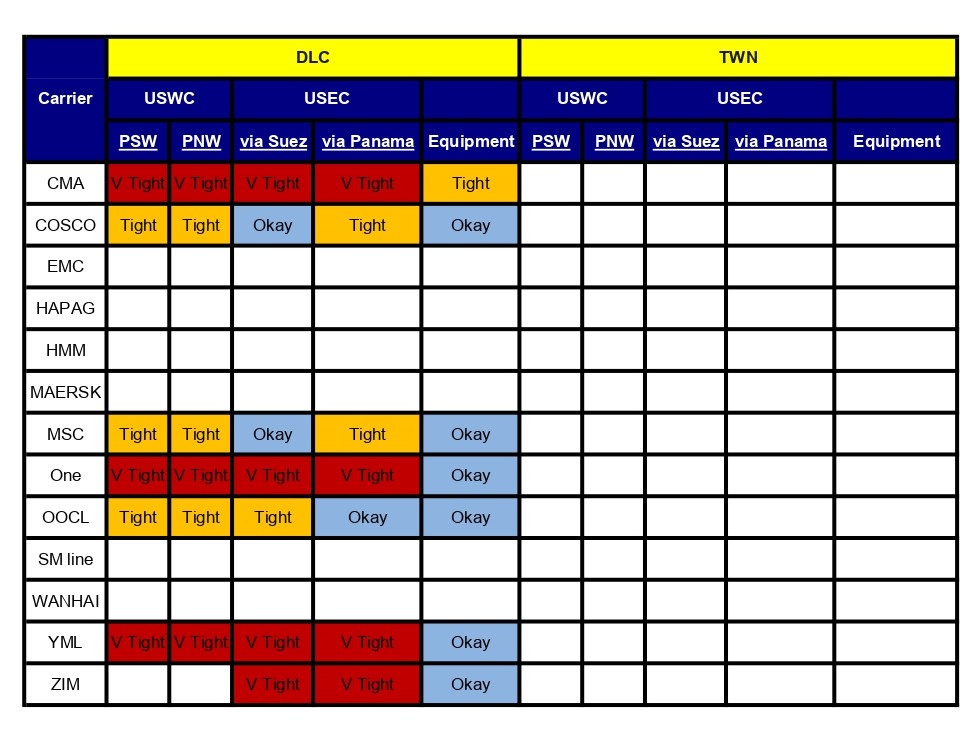
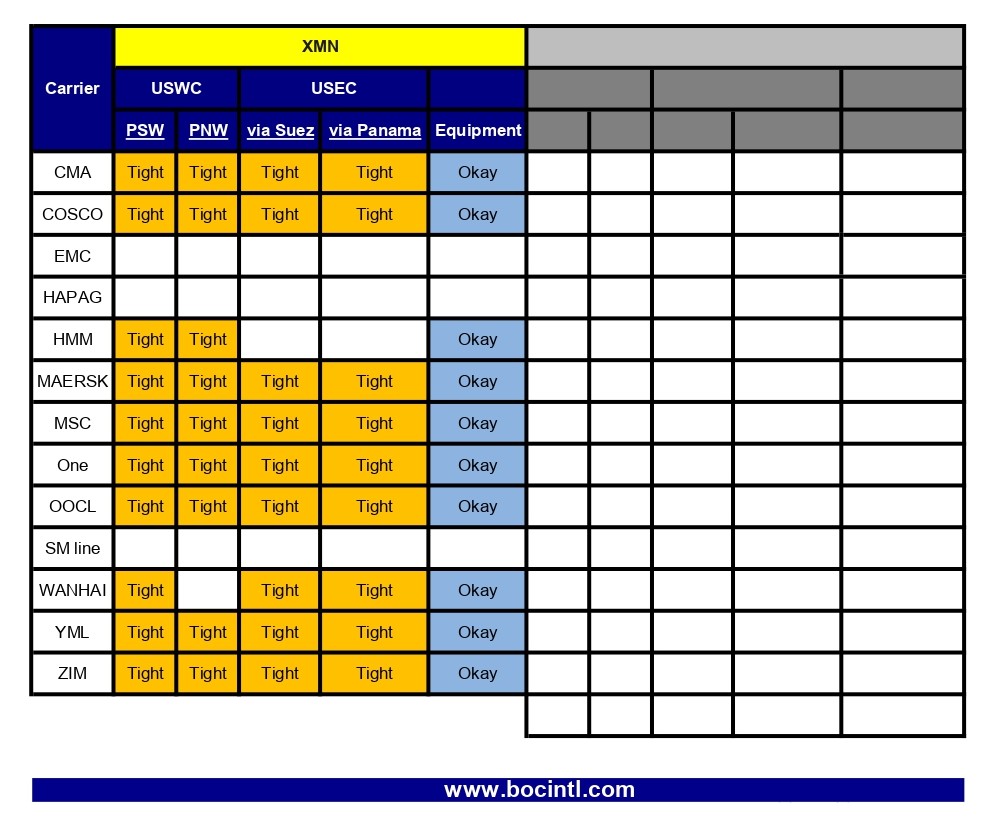
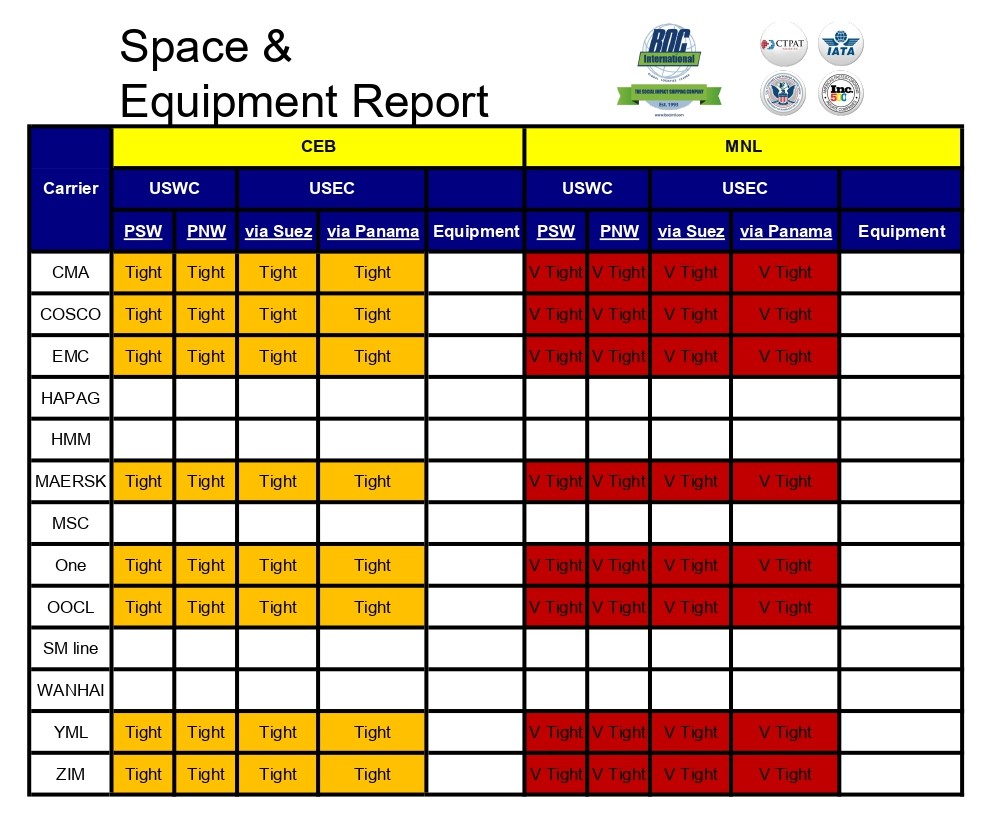
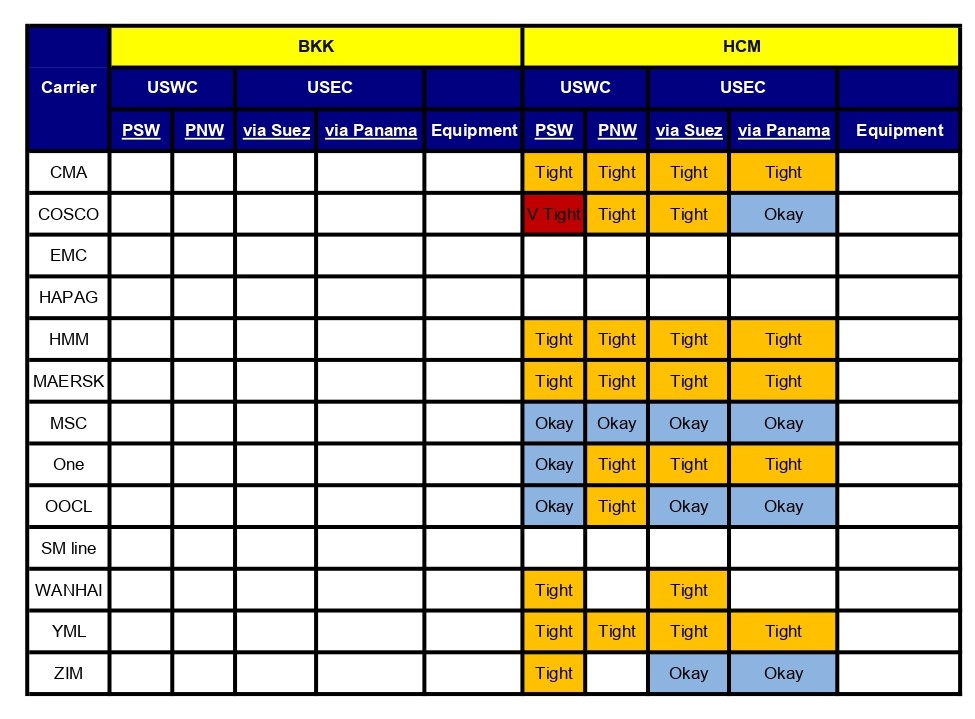
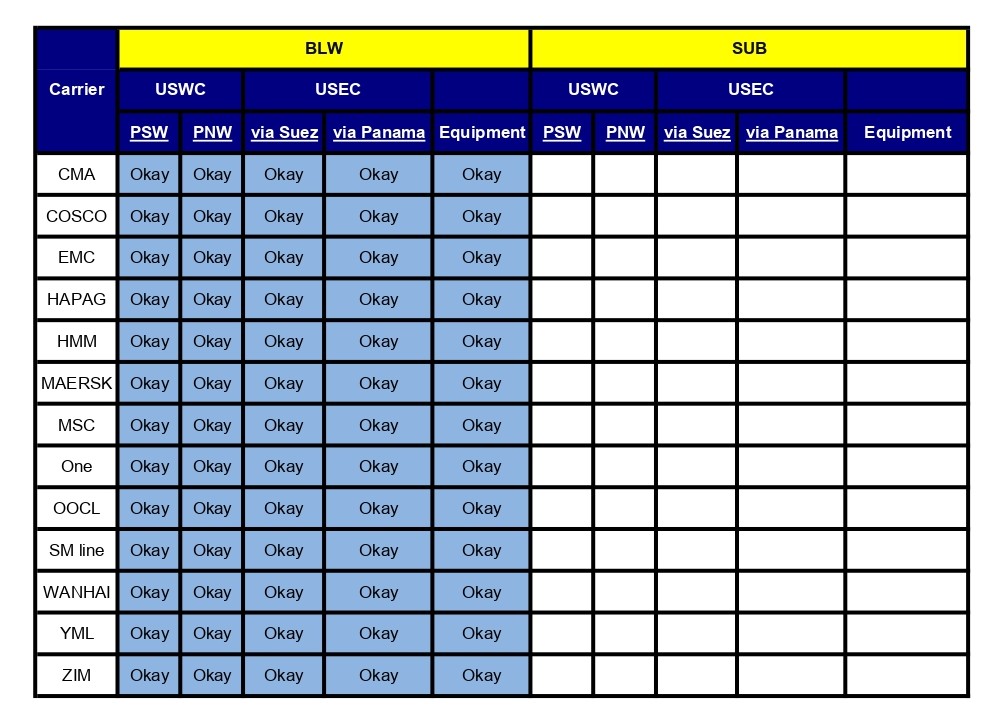
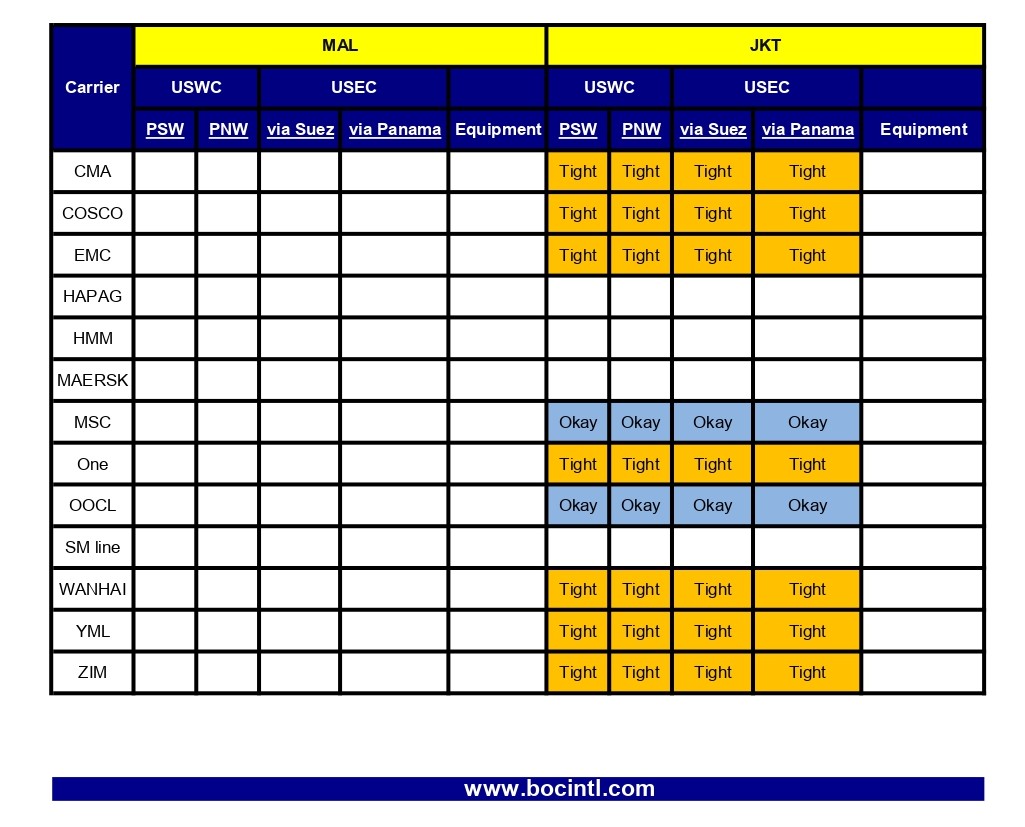
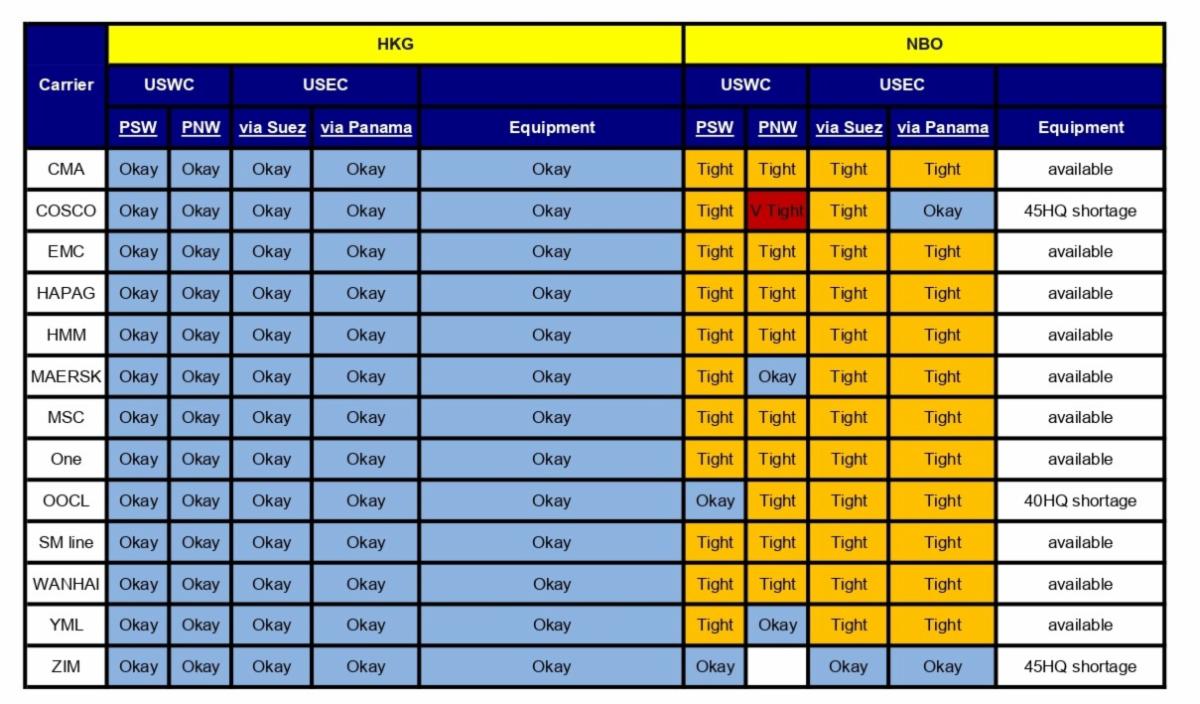
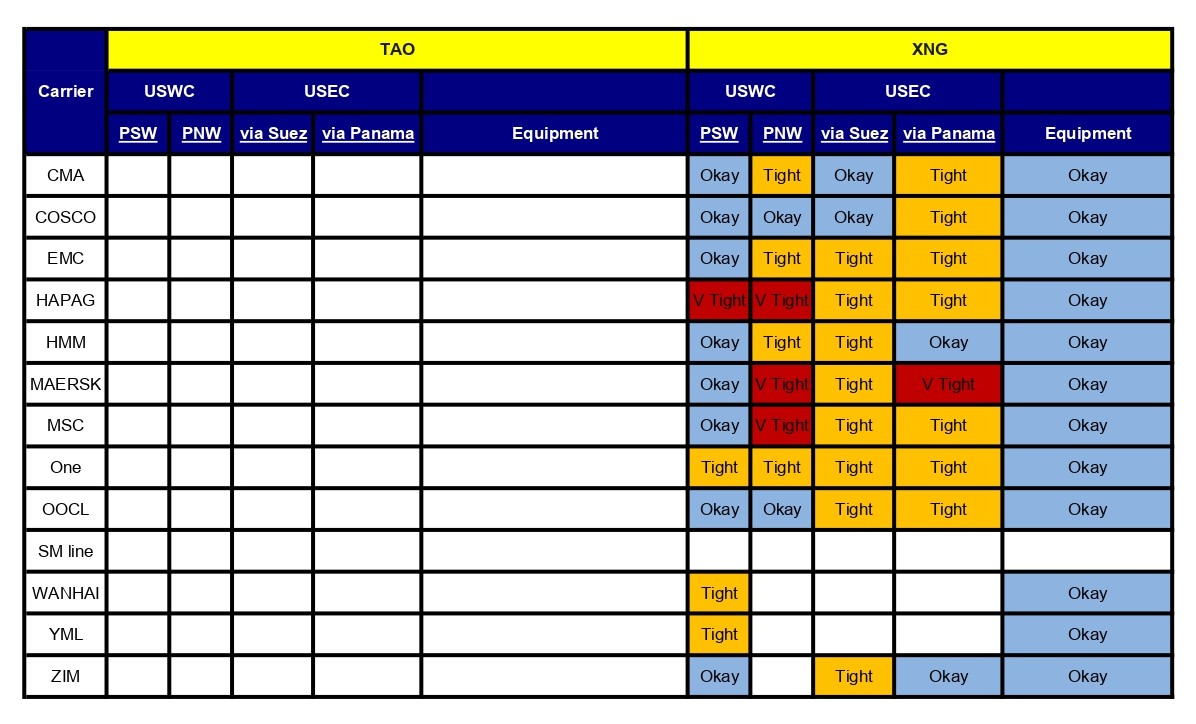
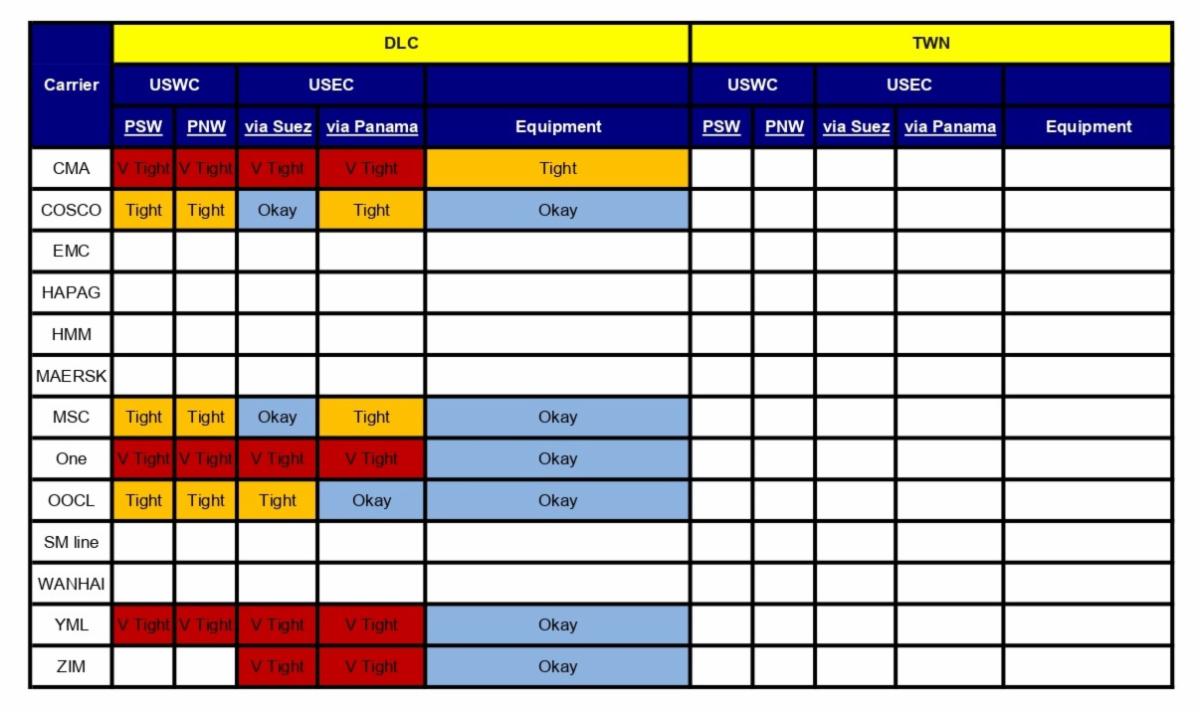
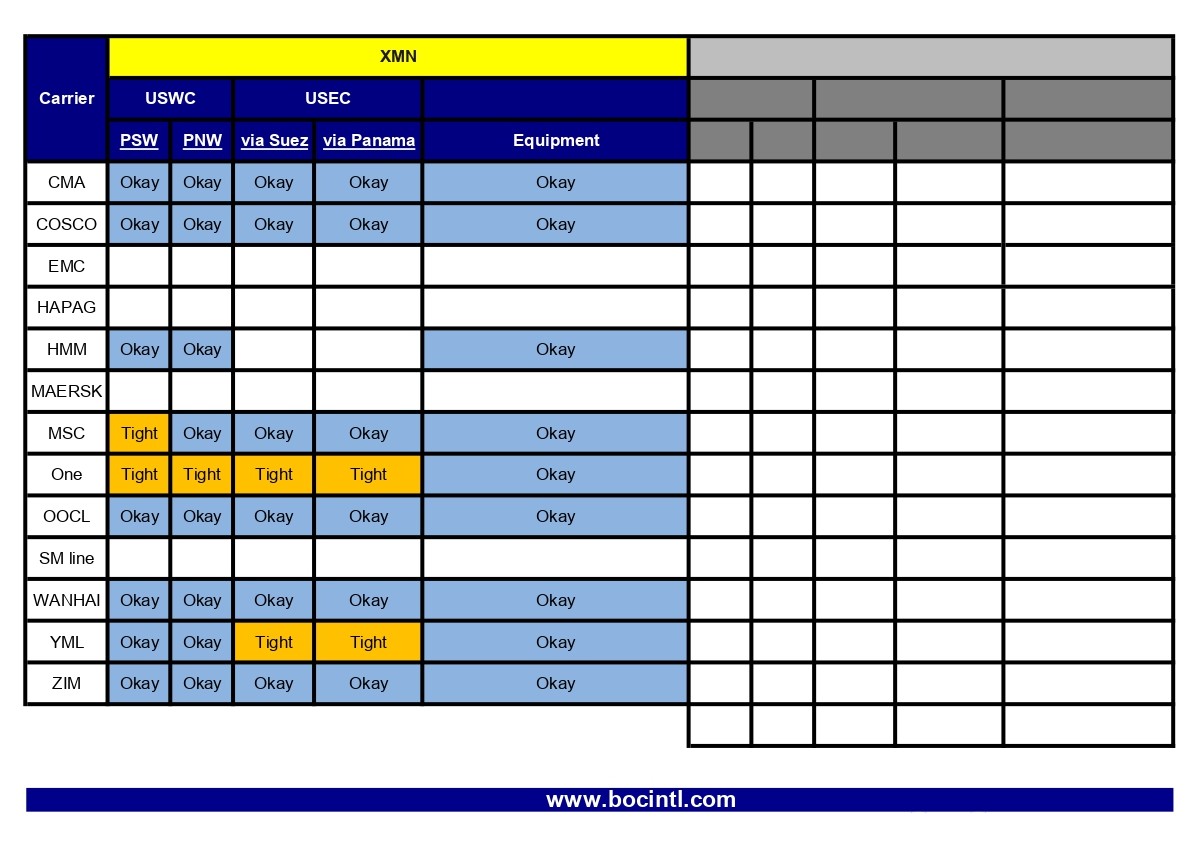
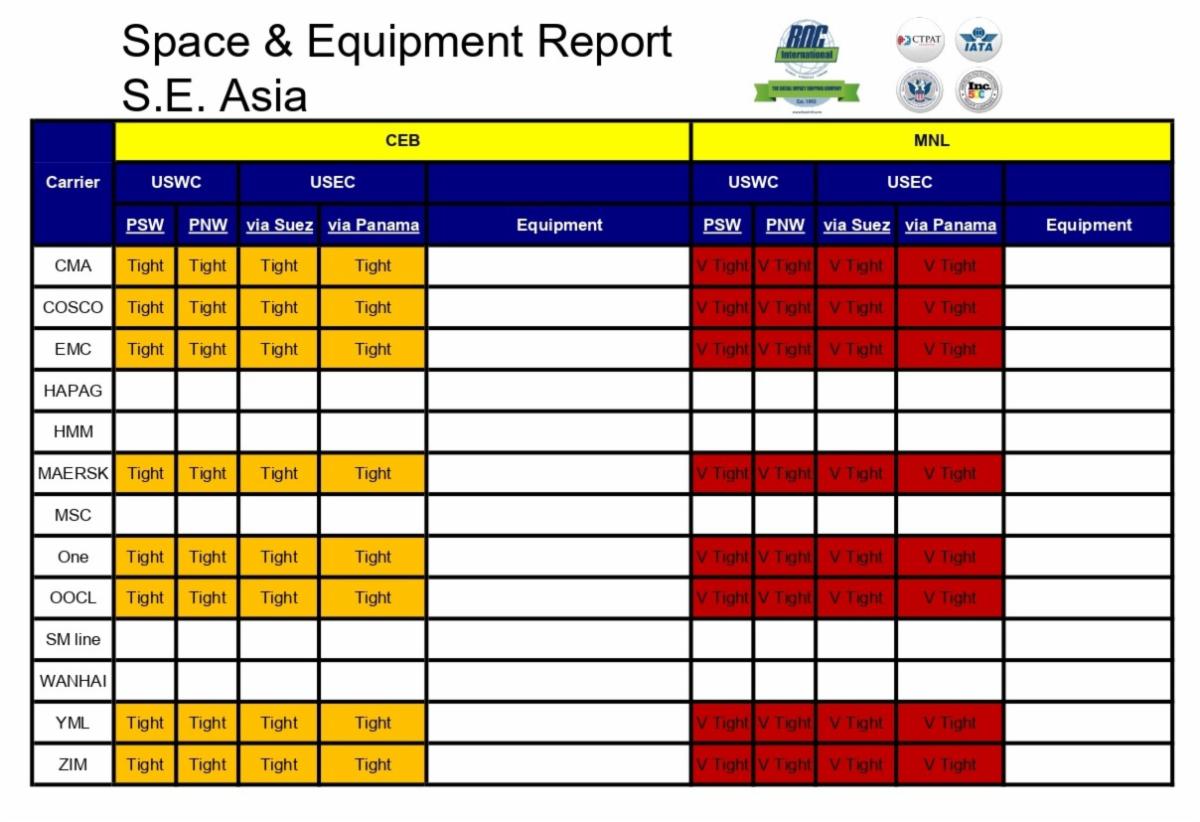
Please find our newest Space and Equipment report, below.
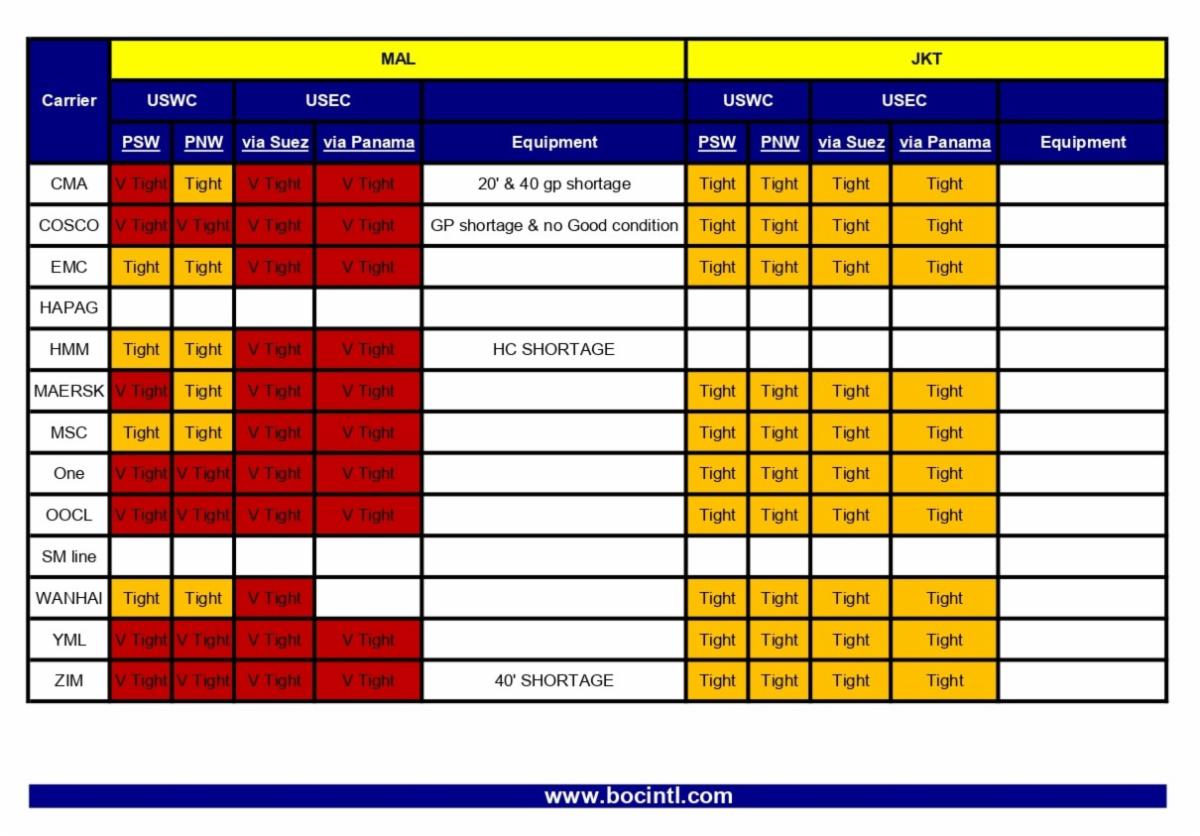
Please note: regardless of the status showing on the report, please reach out to your BOC Representative to discuss existing status. Space availability changes daily, even multiple times per day. This report is just a general guideline. We will always do everything we can to help you move your freight.
………………………………………………………………………………………………………………………………………………………………………………………………………………………………………….
………………………………………………………………………………………………………………………………………………………………………………………………………………………………………….

………………………………………………………………………………………………………………………………………………………………………………………………………………………………………….

………………………………………………………………………………………………………………………………………………………………………………………………………………………………………….
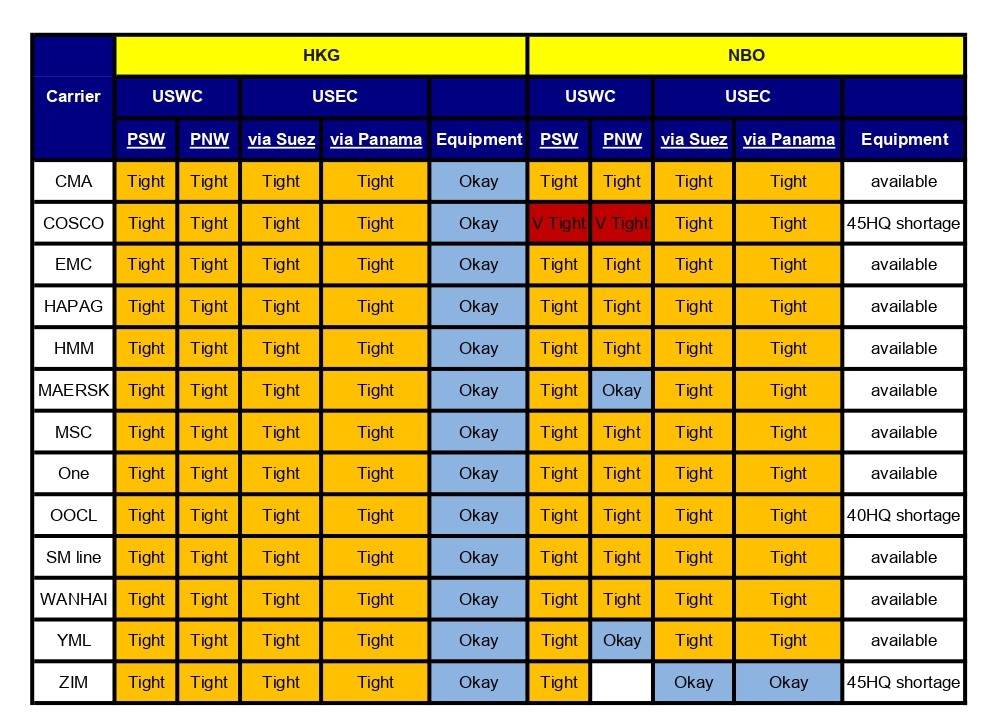
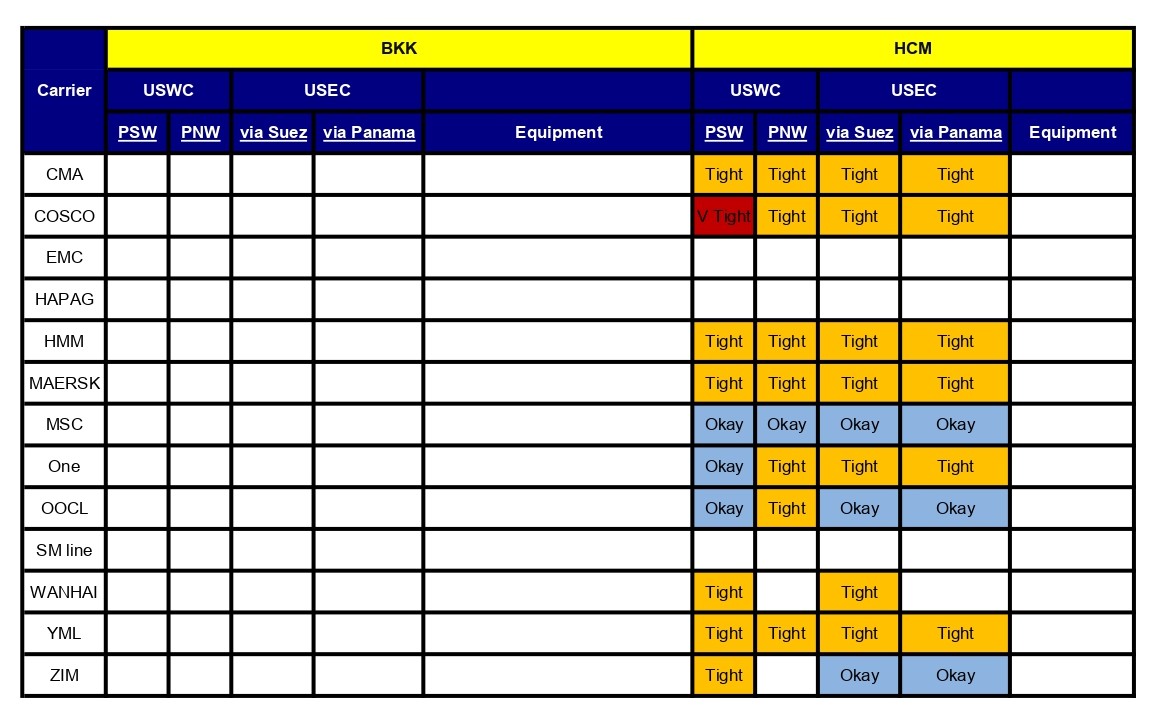
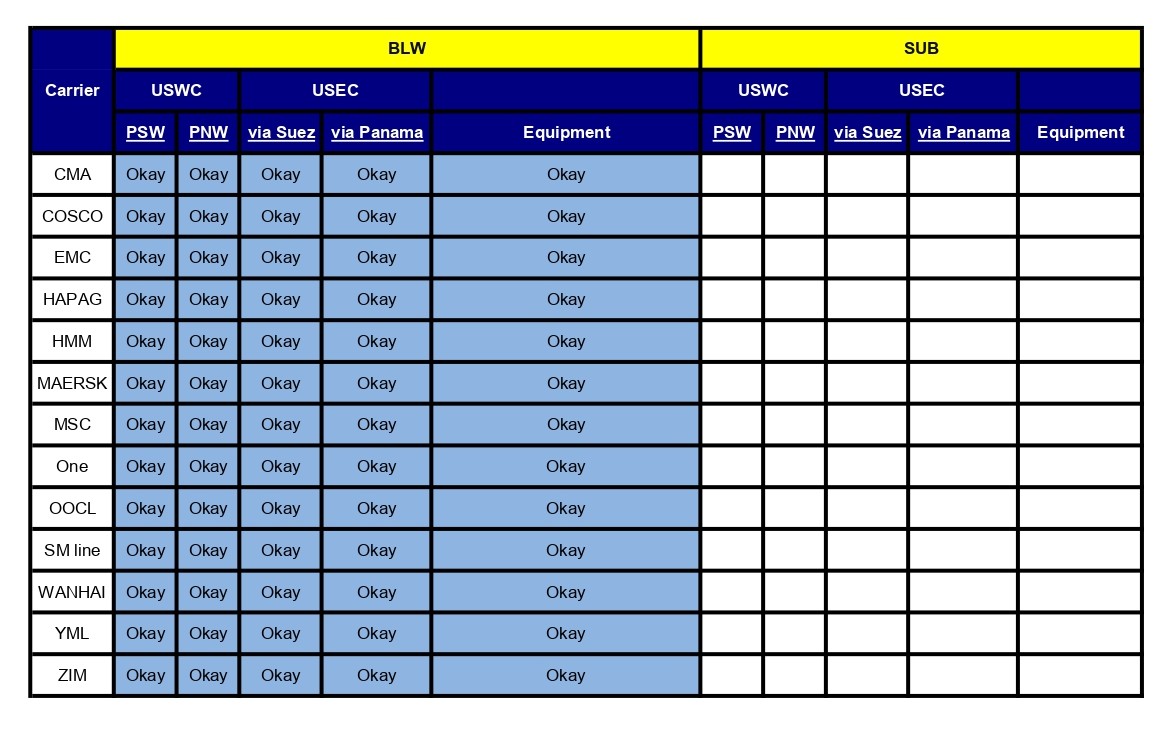
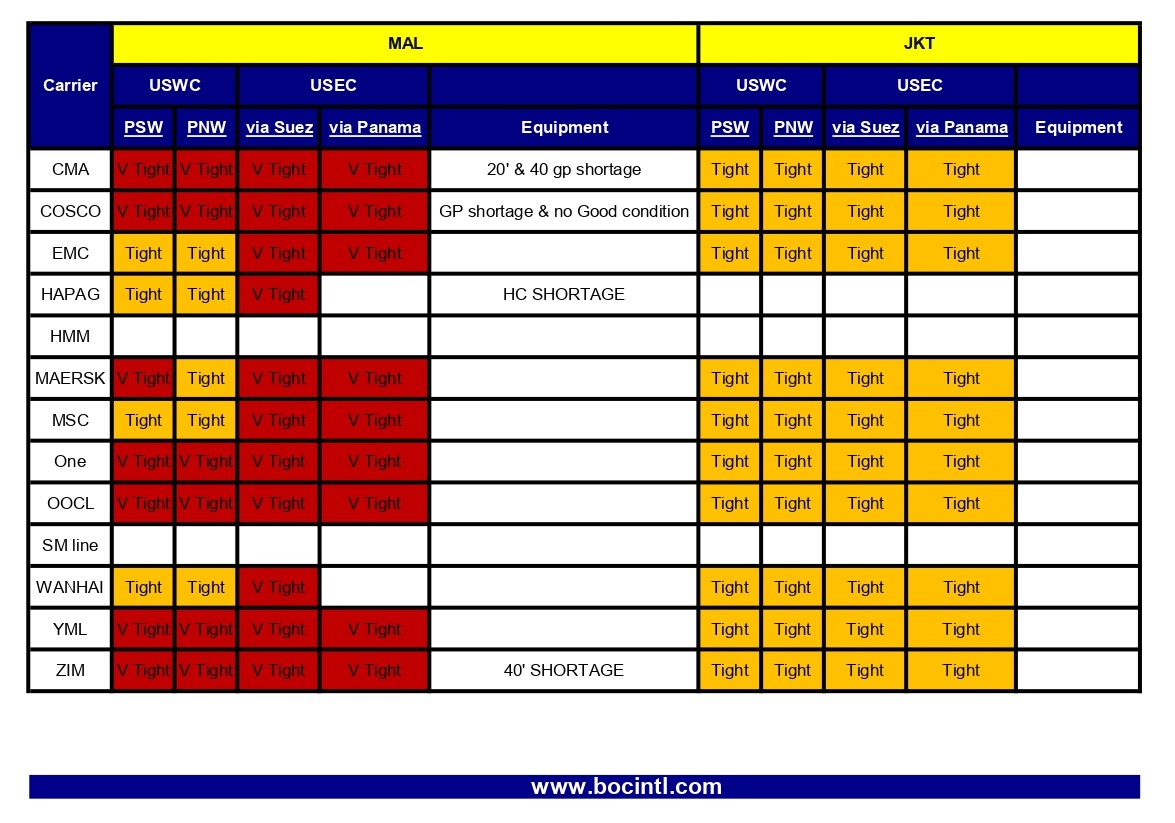
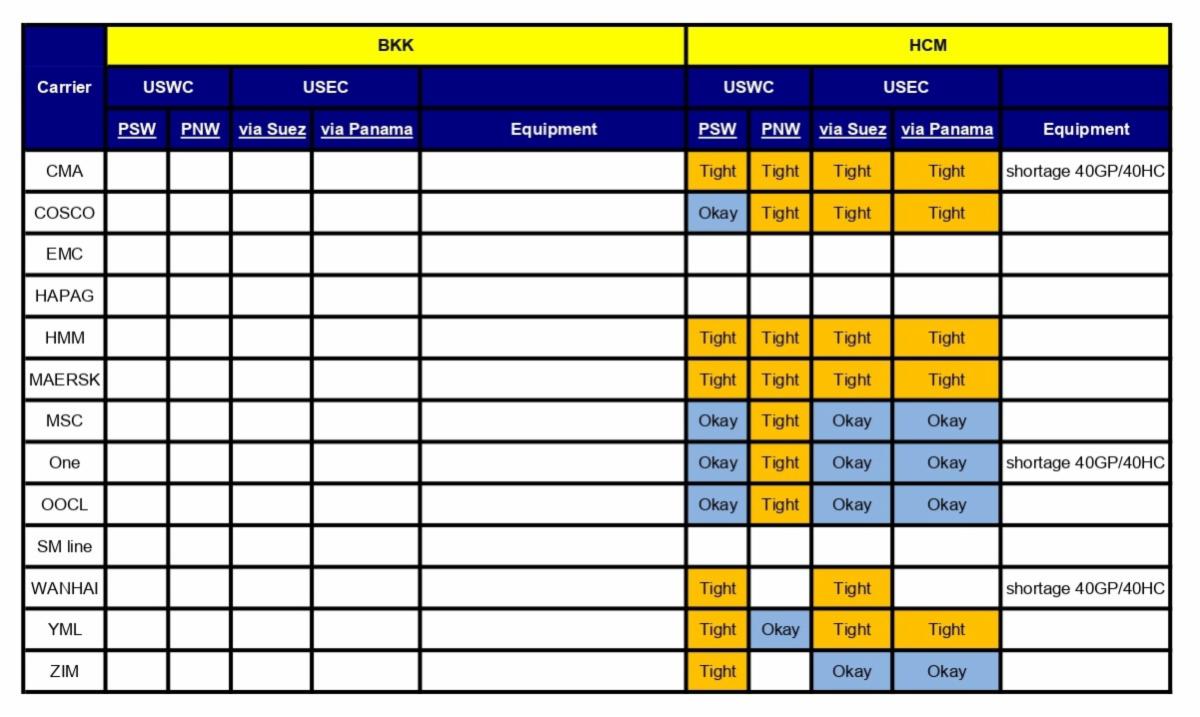
Please find our newest Space and Equipment report, below.
Please note: regardless of the status showing on the report, please reach out to your BOC Representative to discuss existing status. Space availability changes daily, even multiple times per day. This report is just a general guideline. We will always do everything we can to help you move your freight.
………………………………………………………………………………………………………………………………………………………………………………………………………………………………………….
………………………………………………………………………………………………………………………………………………………………………………………………………………………………………….
………………………………………………………………………………………………………………………………………………………………………………………………………………………………………….

………………………………………………………………………………………………………………………………………………………………………………………………………………………………………….
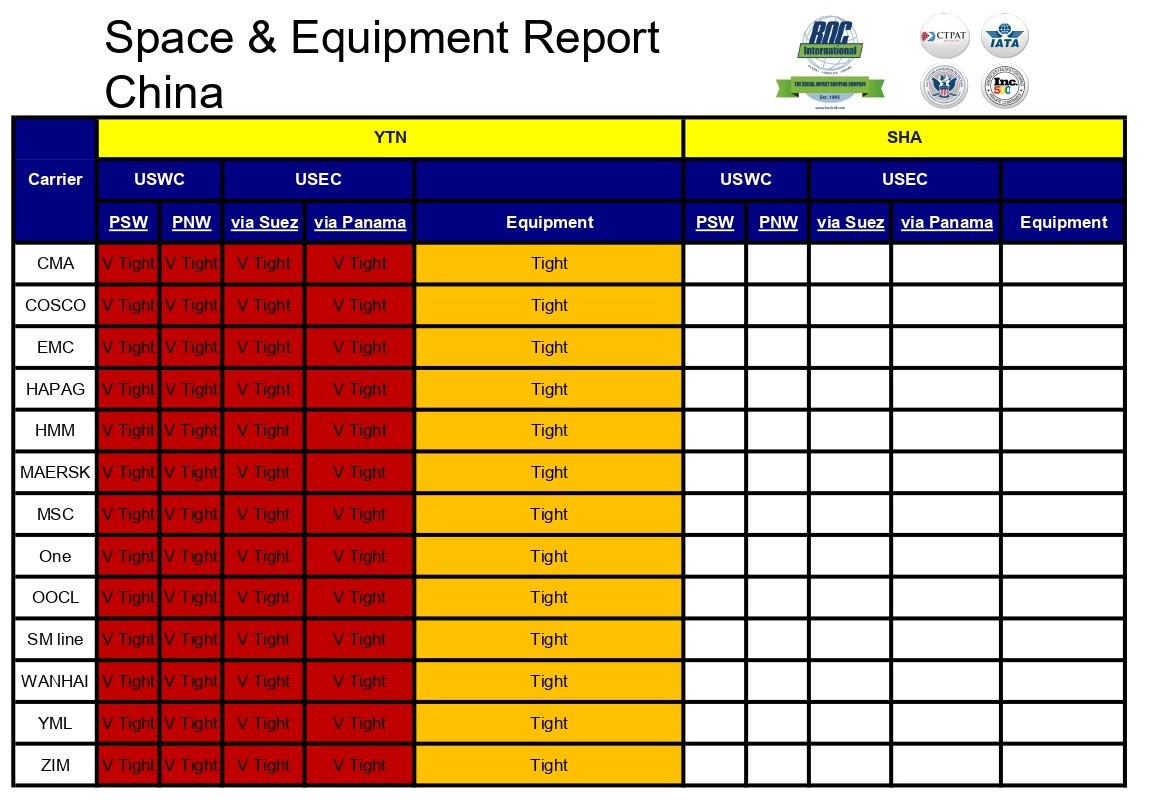
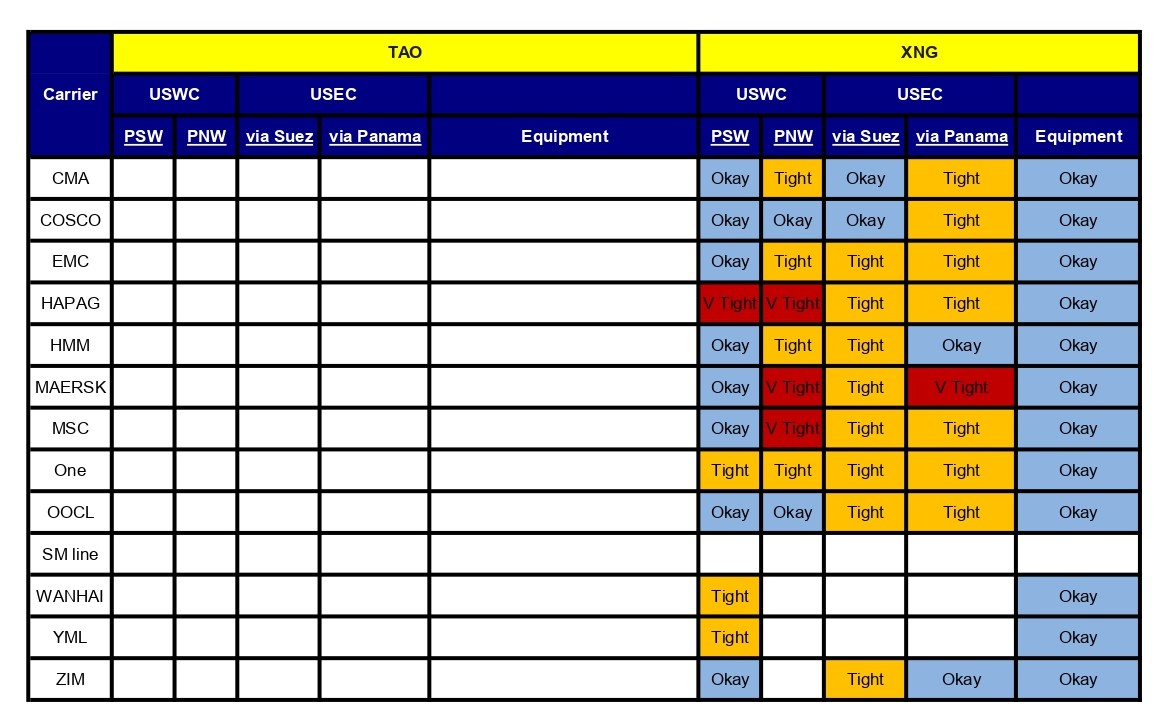
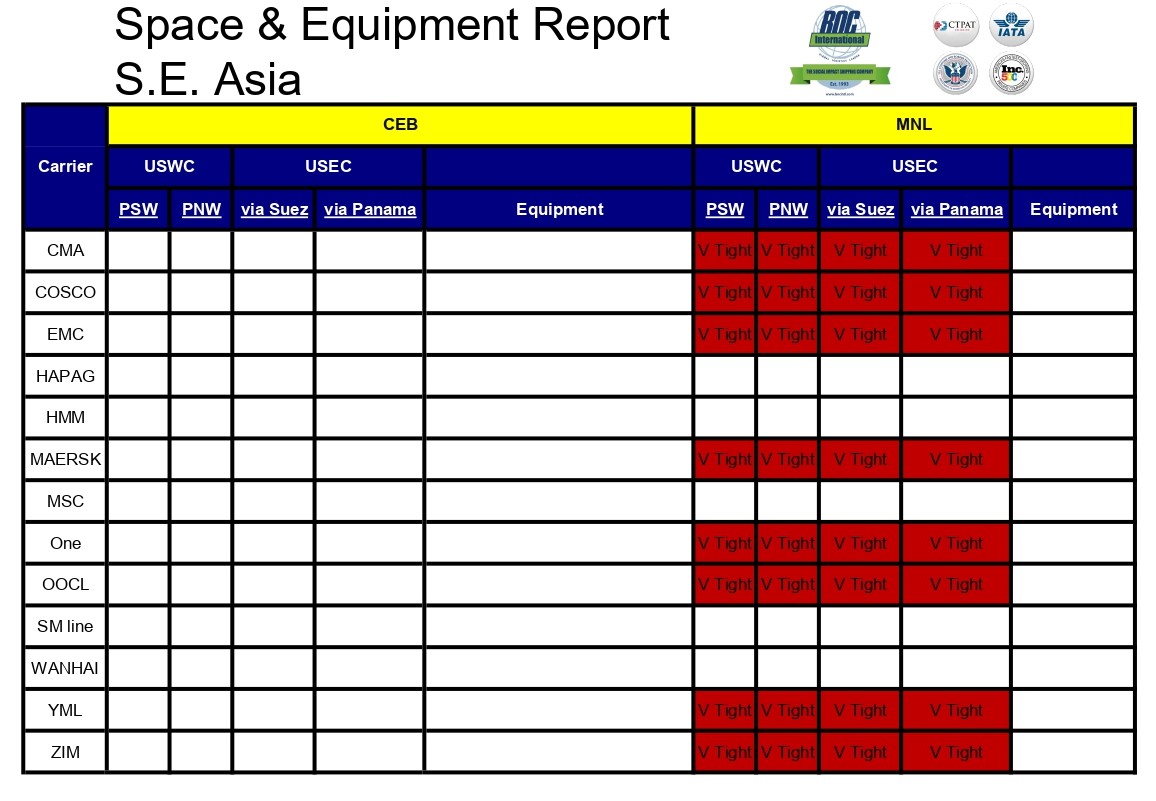
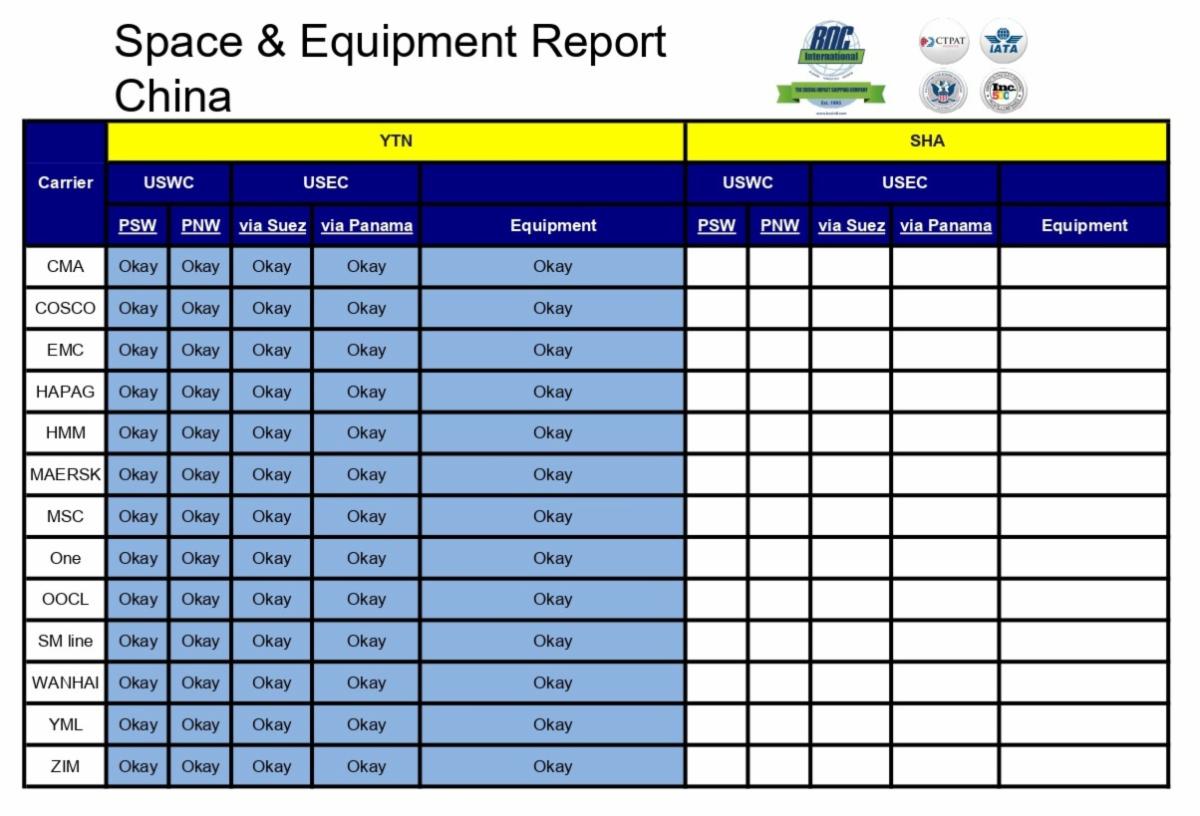
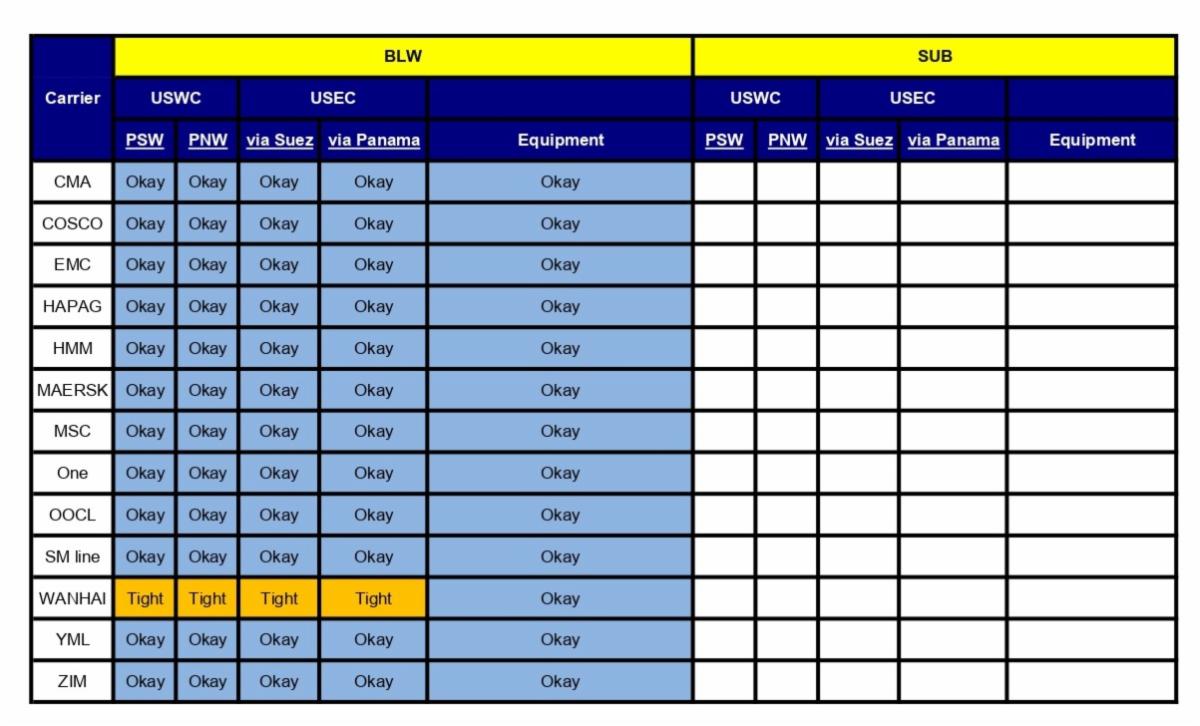
Please find our newest Space and Equipment report, below.
Please note: regardless of the status showing on the report, please reach out to your BOC Representative to discuss existing status. Space availability changes daily, even multiple times per day. This report is just a general guideline. We will always do everything we can to help you move your freight.
………………………………………………………………………………………………………………………………………………………………………………………………………………………………………….
………………………………………………………………………………………………………………………………………………………………………………………………………………………………………….
………………………………………………………………………………………………………………………………………………………………………………………………………………………………………….

………………………………………………………………………………………………………………………………………………………………………………………………………………………………………….
September 2026 Asia to North America Ocean Market Review
………………………………………………………………………………………………………………………………………………………………………………………………………………………………………….
The Asia to North America ocean market continues to face significant operational disruption that is reducing schedule reliability, extending transit times and driving up transportation costs.
For many importers, the challenge is not simply the ocean freight rate. Delays, congestion, inland transportation changes, inventory shortages and routing decisions are all affecting total landed cost.
In this environment, reliability, inventory availability and early routing decisions are becoming increasingly important.
Asia Port Congestion
Congestion at major Asian gateways, particularly Shanghai, Ningbo and Yantian, is causing vessels to fall behind schedule before they begin the transpacific portion of their voyages.
A major contributor has been the unusually active typhoon season. Successive storms have forced temporary port closures, disrupted terminal operations and created vessel backlogs that have been difficult to clear.
The impact goes beyond longer transit times. Congestion is effectively taking vessel capacity out of the market. Ships waiting for berths, skipping port calls or operating significantly behind schedule are not available where and when carriers originally planned to deploy them.
These delays then cascade through carrier networks. Vessels return late, subsequent voyages are disrupted and the result is more schedule slides, port omissions and involuntary blank sailings (sailings that do not take place).
China is also approaching two major holiday periods. The Mid-Autumn Festival runs from September 25 through September 27, followed almost immediately by Golden Week from October 1 through October 7.
These holidays can create additional pressure as factories and shippers work to move cargo before the closures, followed by reduced production and operating activity during the holiday periods.
Blank Sailings and Sliding Schedules
We are seeing a significant amount of schedule sliding and blank sailings across the market.
Unlike traditional blank sailings that may be used by carriers to manage capacity, many of the current disruptions appear to be operationally driven.
Carriers have little incentive to intentionally remove significant capacity while FAK rates remain strong. However, congestion, missed rotations and vessel delays are forcing some sailings to be cancelled, delayed or moved into subsequent weeks.
The result is fewer dependable departures and less predictability around actual delivery dates.
Panama Canal Adds Pressure to East Coast Services
The Panama Canal has become an additional source of uncertainty for Asia to U.S. East Coast routings because of low water levels and below-normal rainfall in the Canal watershed.
What is particularly concerning is the timing. The Canal is already dealing with low-water conditions even though the traditional dry season does not begin until around December.
If conditions continue to deteriorate, further restrictions could place additional pressure on transit capacity and vessel schedules.
The problem becomes greater when vessels arrive late from Asia. Congestion and typhoon-related delays can cause a vessel to miss its scheduled Panama Canal transit window, creating additional waiting time before another transit opportunity becomes available.
A delay that begins in Shanghai, Ningbo or Yantian can therefore compound before the vessel reaches the U.S. East Coast.
Another alternative is routing around the Cape of Good Hope. This is a longer voyage, but as Panama Canal delays become more severe, the Cape routing may provide greater schedule predictability for certain services.
We are beginning to see some carriers consider or shift additional capacity toward Cape of Good Hope routings. The tradeoff is longer transit time and higher operating cost, but a longer planned transit can sometimes be preferable to an uncertain transit with an unpredictable delay.
This is also one of the reasons more importers are considering U.S. West Coast alternatives.
Equipment Availability Emerging as Another Issue
Equipment availability in Asia is also becoming an increasing concern.
When vessels are delayed throughout the network, empty containers do not return to Asian origins on schedule. This slows the equipment cycle and can create shortages at individual origins.
The tighter equipment market is also affecting container quality. We are seeing instances where older or lower-quality containers are being released for export because shippers have fewer alternatives.
Importers should make sure their factories and suppliers inspect containers carefully before loading and reject any equipment that is not suitable for an international ocean move.
Factories should pay particular attention to the floor, doors, seals, roof, sidewalls and any signs of holes, water intrusion or structural damage.
Simply securing a container is not enough. The container also needs to be suitable and seaworthy for the voyage.
Book Early and Pre-Approve Routings
In the current market, booking early is one of the most important steps customers can take.
We are recommending that customers book at least four weeks in advance whenever possible and pre-approve preferred routings before space becomes constrained.
Waiting until cargo is ready can significantly reduce the available options. By that point, the preferred sailing may already be full, equipment may be limited or the most reliable routing may no longer be available.
Early booking gives origin teams more time to secure space, locate quality equipment and protect the desired sailing.
It also allows BOC to evaluate alternative routings in advance rather than reacting after a problem develops.
In this market, the earlier the booking and routing decisions are made, the better the chance of protecting the customer’s required delivery date.
West Coast Routing Becoming More Attractive
For time-sensitive cargo, we are seeing more customers reconsider traditional all-water service to the U.S. East Coast.
Some importers are instead routing freight through U.S. West Coast gateways, transloading the containers and trucking the cargo inland.
Although this strategy can increase inland transportation costs, it removes Panama Canal exposure and can provide greater control over the final delivery schedule.
For customers facing production deadlines, retail commitments or low inventory levels, the additional transportation expense can be significantly less costly than an extended supply chain delay.
IPI Can Eliminate the West Coast Transit Advantage
Traditional IPI rail remains another option for moving West Coast cargo inland, but rail delays can eliminate much of the transit-time advantage.
Recent conditions in Southern California illustrate the issue. Average on-dock intermodal dwell at some terminals is running around 5 days, while off-dock intermodal dwell can exceed 9 days, with some containers waiting significantly longer.
The delays are being driven by a combination of high container volumes, limited rail in-gate capacity, chassis availability, truck power and gate appointments. In some cases, containers are being drayed off-dock to inland rail facilities to help relieve terminal congestion.
When cargo waits this long after vessel discharge, a fast transpacific ocean transit can quickly become a slow overall door-to-door transit.
For urgent shipments, transloading and trucking inland can provide greater predictability than relying on IPI.
The decision should be based on the routing most likely to meet the required delivery date and overall supply chain requirements, rather than simply the lowest transportation cost.
Inventory Is Becoming a Competitive Advantage
The importers that pulled inventory forward earlier in the season are now in a significantly stronger position.
Customers operating with very lean inventories are more exposed to schedule disruptions, equipment shortages, blank sailings and extended transit times.
The pull-forward strategy has paid off for many companies.
Those with inventory will win.
That does not mean every importer should dramatically increase inventory. It does mean companies need to reassess appropriate safety stock when transportation reliability deteriorates.
Additional Risks to Watch
Two additional risks could have a meaningful impact on Asia to North America cargo flows over the coming weeks.
The first is the potential for changes in U.S.-China trade policy following the expected late-September meeting between President Trump and President Xi.
Any meaningful change in tariff policy could quickly influence import volumes. New or higher tariffs could create another rush to move cargo before an effective date, while an easing of tariffs could have the opposite effect.
The second risk is the continuing military conflict in the Middle East and the potential for further disruption to global cargo flows.
Any escalation affecting the Red Sea, Suez Canal or surrounding trade lanes could force carriers to alter routings again, reduce available vessel capacity, increase transit times and add further pressure to transportation costs.
The situation remains particularly difficult to predict because conditions can change quickly. A significant escalation could disrupt the recent progress in returning selected services to the Suez Canal and once again push more vessels toward longer Cape of Good Hope routings.
Some Positive Developments
There are also some positive developments that could eventually help improve capacity and transit times.
Selected vessels and services have begun returning to the Suez Canal following carrier security assessments. If this trend continues, shorter vessel rotations could gradually release some capacity that has been tied up by the much longer Cape of Good Hope routing.
However, we would not view this as a significant market shift yet. Security conditions in the Middle East remain fluid, and renewed attacks or broader regional escalation could quickly cause carriers to reverse course and move vessels back around the Cape.
We are also seeing additional capacity and routing options developing from the Indian Subcontinent to North America.
India continues to grow as an important sourcing market for North American importers, and increased carrier attention to this trade should provide customers with more alternatives.
These are encouraging developments, but they should be viewed cautiously given the continuing volatility across the global transportation network.
Near-Term Outlook
We expect conditions to remain challenging through September and potentially worsen around the Mid-Autumn Festival from September 25 through September 27 and Golden Week from October 1 through October 7.
Asian port congestion, reduced effective vessel capacity, equipment shortages and Panama Canal restrictions should continue to pressure transit times, transportation costs and schedule reliability.
There are some encouraging signs, including selected services beginning to use the Suez Canal again and additional capacity serving India to North America.
Overall, however, we believe the market may get worse before it gets better.
Our current expectation is that more meaningful operational relief could begin in late October as post-holiday volumes moderate and vessel networks have an opportunity to recover.
BOC Perspective: Intelligence Through Strategic Planning
In a disrupted market, intelligence is about using information early enough to make better decisions.
Customers need visibility into origin congestion, vessel schedules, Panama Canal conditions, equipment availability, rail delays and inland capacity so they can evaluate alternatives before disruption affects their supply chain.
That may mean continuing to move cargo all-water to the East Coast when schedules are reliable.
It may mean shifting selected shipments through the West Coast to avoid Panama Canal delays.
It may mean considering a Cape of Good Hope routing where a longer planned transit provides greater predictability.
For more urgent cargo, it may mean transloading on the West Coast and trucking inland rather than relying on IPI rail.
The right solution can vary by shipment, destination, inventory position and required delivery date.
BOC’s role is to help customers see risks earlier, understand the alternatives and make better routing decisions before delays become problems.
Please reach out when you are making critical supply chain decisions. Whether you are evaluating alternative routings, deciding when to ship, determining where to position inventory or trying to avoid a potential delay, our team can help you assess the options and make the best decision for your supply chain.
Early planning and informed decisions can make a meaningful difference.
BOC is here for you as your intelligent logistics partner for companies who expect more than transportation. We combine technology, market intelligence, and exceptional people to build stronger supply chains. Let’s succeed together. Thank you for all your support.
Best, Patrick Fay

………………………………………………………………………………………………………………………………………………………………………………………………………………………………………….