Blast #576 Major Disruptions Around The Strait of Hormuz Cause Shipping Issues


………………………………………………………………………………………………………………………………………………………………………………………………………………………………………….
Major Disruptions Around The Strait of
Hormuz Cause Shipping Issues
………………………………………………………………………………………………………………………………………………………………………………………………………………………………………….
QUOTE:
Iran’s most powerful weapon is not a bomb. It is the geography it controls.
The Strait of Hormuz is a narrow shipping corridor between Iran and Oman. If that passage is effectively closed or significantly restricted for any sustained period, the economic consequences could rival those of a major military escalation.
Markets are already reacting to the possibility. West Texas Intermediate crude oil has soared past $110 per barrel as traders price in rising geopolitical risk. But that move may only represent the early stages of a potential energy shock if tensions escalate further.
The real issue is not simply higher fuel prices. It is the vulnerability of a global energy system that depends heavily on a handful of critical transit routes. (emphasis added)
Excerpted from Forbes.com – https://www.forbes.com/sites/rrapier/2026/03/09/irans-real-nuclear-option-isnt-a-bomb-its-the-strait-of-hormuz/
………………………………………………………………………………………………………………………………………………………………………………………………………………………………………….
Maersk Has 10 Ships Trapped in Gulf, Running Short of Fuel in Asia
Danish containership major A.P. Moller-Maersk has 10 ships trapped in the Persian Gulf and would need at least a week to 10 days to resume normal operations in the event of a cease-fire, CEO Vincent Clerc told The Wall Street Journal.
Brokers say there are more than 100 boxships trapped in the Gulf, with the Jebel Ali port in Dubai a distribution hub for the Middle East.
Some ports in Asia are running low on ship fuel, and oil-supply issues threaten to limit calls by containerships that move everything from cars to electronics and home goods.
“The longer the strait stays closed, the more the replenishing of oil inventories in Asia becomes a challenge,” Clerc said.
If Maersk can’t get fuel in Asia, it will have to charter tankers to bring it in and the extra cost will be reflected in higher freight rates. Daily charter rates for supertankers are at near record levels of more than $400,000.
Excerpted from WSJ.com

………………………………………………………………………………………………………………………………………………………………………………………………………………………………………….
Three ships in Strait of Hormuz hit by ‘unknown projectiles’
Three cargo vessels have been hit by “unknown projectiles” in the Strait of Hormuz, maritime authorities say, as pressure intensifies on one of the world’s most important shipping lanes.
Traffic through the strait – a vital corridor for oil – has fallen sharply since Israel and the US attacked Iran in late February, sending global energy prices soaring.
Iran said it unleashed another volley of retaliatory attacks across the Gulf on Wednesday, with targets including a major oilfield in Saudi Arabia and drones falling near Dubai International Airport.
Earlier, the US said it had “eliminated” 16 ships capable of laying mines in the Strait of Hormuz.
There have been 13 suspected Iranian attacks on vessels operating around the Gulf since the war began.
On Wednesday, Thailand’s navy said it was providing emergency assistance after a Thai-flagged vessel was hit 11 nautical miles north of Oman, causing a fire on board. In a statement, the Royal Thai Navy said the ship’s 23 crew members were being rescued.
Meanwhile, a Japan-flagged container ship sustained minor damage after it was struck 46km (around 25 nautical miles) off the United Arab Emirates coast, maritime security firm Vanguard told the BBC.
And a third cargo vessel was hit 93km (around 50 nautical miles) north-west of Dubai, the UK Maritime Trade Operations (UKMTO) said.
The cause of the attacks are being investigated.
The UKMTO has urged all ships passing through the area to “transit with caution”.
Excerpted from BBC.com
………………………………………………………………………………………………………………………………………………………………………………………………………………………………………….
- Published in The BOC Blast
Blast #575 CIT Suspends Earlier Order Directing IEEPA Tariff Refunds

………………………………………………………………………………………………………………………………………………………………………………………………………………………………………….
CIT Suspends Earlier Order Directing IEEPA Tariff Refunds
………………………………………………………………………………………………………………………………………………………………………………………………………………………………………….
Excerpted from thomsonhinesmartrade.com
Read full story here:
On March 6, 2026, Judge Richard Eaton of the U.S. Court of International Trade (CIT or Court) held a closed conference in Atmus Filtration, Inc. vs. United States, to continue the Court’s process in determining how the International Economic Emergency Powers Act (IEEPA) tariffs can be refunded to importers of record.
At the conclusion of the conference, Judge Eaton paused his earlier order directing CBP to immediately begin paying refunds (emphasis added), noting a declaration submitted by U.S. Customs and Border Protection (CBP) discussing limitations and difficulties in complying with this aspect of the order.
This conference followed the CIT’s order earlier this week finding that “[a]ll importers of record whose entries were subject to IEEPA duties are entitled to the benefit” of the U.S. Supreme Court’s February 20, 2026 decision, invalidating the IEEPA as lawful authority to impose tariffs. For recent background information, see Thompson Hine updates of February 20, 2026, March 2, 2026, and March 4, 2026.
In response to the CIT’s order on IEEPA tariff refunds, Brandon Lord, Executive Director of Trade Programs for CBP filed a declaration detailing how CBP may be able to provide tariff refunds. In providing the scope of the task, Lord stated that, as of March 4, 2026, “over 330,000 importers have made a total of over 53 million entries in which they have deposited or paid duties imposed pursuant to the [IEEPA] …. [and that] the total amount of IEEPA duties and estimated duty deposits collected pursuant to IEEPA is approximately $166 billion.” The declaration generally details the framework for entry and liquidation and the capabilities of CBP’s electronic Automated Commercial Environment (ACE) system that records U.S. imports.
To address the CIT’s order to refund the IEEPA duties, Lord states in his declaration that CBP is faced with an “unprecedented volume of refunds” and that the agency’s “existing administrative procedures and technology are not well suited to a task of this scale and will require manual work that will prevent personnel from fully carrying out the agency’s trade enforcement mission.” He also notes that the current system “requires refunds be certified for accuracy by personnel from both CBP’s Office of Field Operations and Office of Finance, separately, before submission to the Department of the Treasury for issuance.” Assuming each entry subject to the IEEPA tariffs is entitled to a refund, Lord notes that this would total 53,173,939 refunds involving 330,566 importers..
Lord states in his declaration that “CBP is confident that it can develop and implement new ACE functionality that will streamline and consolidate refunds and interest payments on an importer basis,” and anticipates that the process will involve the following steps:
- The importer files a declaration in the ACE that includes a list of entries on which IEEPA duties were paid.
- The ACE runs a series of validations on each entry within the declaration and automatically re-calculates the duty owed without the IEEPA tariffs (with applicable interest).
- CBP verifies the declaration and processes refunds as soon as practicable.
- The ACE automatically finalizes (liquidates or reliquidates) the entries.
- The ACE automatically aggregates the refunds with interest by importer and liquidation date.
- CBP certifies the refunds.
- The Department of the Treasury issues IEEPA refunds electronically.
CBP is making all possible efforts to have this new ACE functionality ready for use in 45 days.
It should be noted that two immediate legal options remain for the U.S. government defendants: (i) filing a petition before the U.S. Supreme Court for rehearing of its IEEPA decision; and/or (ii) appealing to the U.S. Court of Appeals for the Federal Circuit any of the recent orders issued by the CIT seeking to implement the higher court’s decision and addressing how refunds will be issued. Despite a surprisingly quick response by the CIT to proceed, it should be remembered that President Donald Trump stated that this matter could be litigated for years.
See also, additional information from Sandler, Travis & Rosenberg, PA:
- Published in The BOC Blast
Blast #574 Court of International Trade Rules Companies Are Entitled to Refunds for IEPPA Tariffs

………………………………………………………………………………………………………………………………………………………………………………………………………………………………………….
Court of International Trade Rules Companies Are Entitled to Refunds for IEPPA Tariffs
………………………………………………………………………………………………………………………………………………………………………………………………………………………………………….
On March 4, 2026, the U.S. Court of International Trade (CIT) (Judge Richard Eaton) ruled that companies are entitled to refunds for tariffs imposed under the International Emergency Economic Powers Act (IEEPA), which were struck down by the Supreme Court on February 20, 2026. The ruling directs CBP to liquidate or reliquidate entries without these duties.
Key Details of the CIT Ruling:
- Scope: All “importers of record” whose entries were subject to the illegal IEEPA duties are entitled to the benefit of the Supreme Court’s ruling.
- Action Required: CBP is ordered to liquidate unliquidated entries and reliquidate non-final entries without the IEEPA duties.
- Procedural Consolidation: Judge Eaton indicated he will be the sole judge hearing cases regarding the refund of these specific IEEPA duties for efficiency.
- Impact: The ruling affects potentially over $100 billion in tariffs, setting the stage for major refunds.
- Next Steps: Judge Eaton set a hearing for Friday, March 6, 2026, to hear updates from the government, including the initial steps for how CBP will process these refunds without requiring every importer to file a new complaint.
- This decision followed the Supreme Court’s determination that the President lacked the authority to impose these specific tariffs under the IEEPA, as taxation power belongs to Congress.
Find full ruling here: https://storage.courtlistener.com/recap/gov.uscourts.cit.19346/gov.uscourts.cit.19346.21.0.pdf
Please remember, this is a court ruling. Nothing has yet been published in the Federal Register that dictates a process for actually issuing refunds. Until that has been announced and is law, we still wait for more information.
………………………………………………………………………………………………………………………………………………………………………………………………………………………………………….
- Published in The BOC Blast
Blast #573 Middle East Conflict and Its Impact on Shipping

………………………………………………………………………………………………………………………………………………………………………………………………………………………………………….
QUOTING FROM INSURANCEJOURNAL.COM:
https://www.insurancejournal.com/news/international/2026/03/03/860259.htm
and
BLOOMBERG.COM:
………………………………………………………………………………………………………………………………………………………………………………………………………………………………………….
QUOTE:
‘Black Swan’ Risks Stalk Container Carriers in Avoiding Iran War
March 3, 2026
By Bloomberg News
(Bloomberg) – The Iran conflict has thrust container shipping from an industry bracing for a capacity glut to another potential “black swan” supply crunch.
That paradigm shift dawned on the more than 3,500 importers, freight forwarders and ocean carriers gathered this week in Long Beach, California. S&P Global’s TPM conference is normally a forum where contracts are hammered out, innovations are unveiled, and the competition is fierce to lure attendees for drinks and hors d’oeuvres at sponsored happy hours.
Through Covid, Russia’s war in Ukraine and US tariffs, the event also provided informal crisis counseling and camaraderie for those running the world’s strained supply chains.
This year’s agenda turned dour almost overnight. The US-Israel alliance’s strikes on Iran and the retaliation that followed since Saturday injected fresh chaos into the Mideast as a trade hub. Within days, the booming crossroads for goods between Asia, Europe, North America and Africa was looking more like a logistics manager’s nightmare: a chokepoint.
“This is a market that, yes, is going through a multi-year period of overcapacity, but is defined more than ever by sudden, unexpected disruption,” said Peter Tirschwell, vice president for maritime and trade at S&P Global Market Intelligence.
“That has the effect of abruptly pulling capacity out of the market. And we’re seeing this play out in real time, right in front of our eyes.”
The opening discussions Monday about Persian Gulf shipping strains evoked memories from the pandemic: piles of containers on docks as drayage trucks sat in gridlock, anchored vessels waiting weeks to unload, soaring freight rates and delayed shipments — all helping fuel the worst bout of US inflation in decades.
Red Sea Worries
Just a week or two ago, a full return to the Suez Canal and Red Sea rather than the longer route south of Africa seemed likely this year. That would’ve ended the diversions of the past two years, adding back capacity and — if not managed carefully by the carriers — weighing on spot container rates. Compounding the oversupply concerns was the arrival of a fleet of new vessels bought with ocean liners’ pandemic-era profits.
Clouding the demand picture were President Donald Trump’s trade wars and the impact on global goods trade.
On Monday, the TPM discussions turned to managing an unexpected cargo pileup in a war zone.
Jeremy Nixon, the CEO of Ocean Network Express, said Monday there were about 750 ships caught up in what was effectively the closure of the Strait of Hormuz, with about half of them inside of the Gulf and half on the way there. About 100 of those are container ships, he said.
Nixon said the immediate impact is pretty clear: Insurance companies have refused to cover vessels in the area and fuel costs are spiking higher. Most carriers, including ONE, have had to stop taking bookings on cargo bound for the Middle East.
“All of that cargo is going to start backing up into the hubs and into the key locations in Europe and in Asia,” he said. Many of the vessels already caught up in the conflict area will have to turn around and attempt to offload in alternate ports.
It will inevitably have an impact on freight rates, fuel costs and equipment imbalances, Nixon said. “It’s another black swan event,” he said, adding that capacity at several major ports in Europe, Latin America and Asia is already an issue.
It’s not just maritime freight facing problems. Key hubs for air cargo are also closed or operating scaled-back schedules.
Air Cargo Congestion
“Airlines including Emirates, Qatar Airways, and Lufthansa have suspended or reduced flights, rerouting traffic around the conflict zone and limiting use of key transload hubs in Dubai, Abu Dhabi, and Qatar due to retaliatory missile activity,” Laufer Group International, a logistics services provider, wrote Monday in a note to clients. “More schedule changes are expected in the coming days.”
Longer routings require more fuel, which in turn reduce payloads so flights comply with weight limits and potentially add delays because of refueling stops, Laufer explained. “Capacity tightening and fuel-driven surcharges are likely to push rates higher,” it said.
Kathy Liu, vice president of global sales and marketing at Taiwan-based Dimerco Express Group, said about 13% of global air freight capacity was knocked out as of Monday. She’s been fielding calls from customers concerned about delays and additional costs related to their shipments.
“We’re trying to move the shipments to avoid to transiting the Middle East by using other Asia-based carriers,” Liu said. “But because the supply is getting less all of sudden, we expect that the market rates will go up a lot.”
Even though it may be centered in the Middle East, eventually disruptions could spread to the busiest global trade lanes.
Ripple Effects
Depending on the scope and duration of the conflict, “we will continue to see the ripple effects for a period of time,” said Trine Nielsen, vice president of global ocean at digital freight forwarder Flexport.
“Carriers will typically want to have the equipment on the trades that are most profitable,” Nielsen said. “Even if this is maybe a Middle East situation, the ripple effects could translate into also the transpacific trade.”
The fighting has already spurred a rally in oil prices. Former Federal Reserve Chair Janet Yellen warned the TPM26 gathering that spike could mean both a hit to US economic growth and added inflationary pressures, complicating the job of balancing low inflation with a hearty labor market.
As for those contract negotiations between carriers and cargo shippers, it’s too soon to say because so much hinges on the ability of goods to flow smoothly through the Mideast again.
“What we’re seeing now, depending on how long it goes for, is going to define the market in 2026,” Tirschwell said. “Two weeks ago, we barely even saw this coming.”
? 2026 Bloomberg L.P.
END QUOTE
………………………………………………………………………………………………………………………………………………………………………………………………………………………………………….
- Published in The BOC Blast
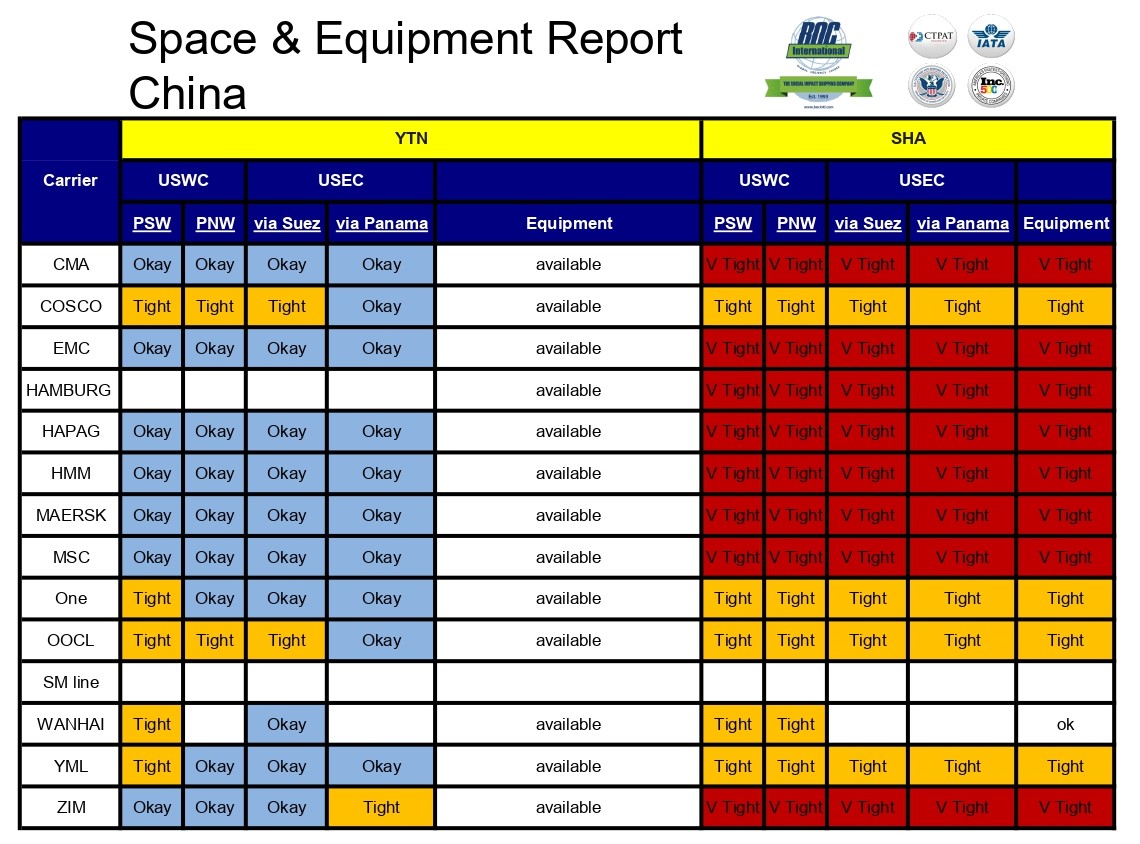
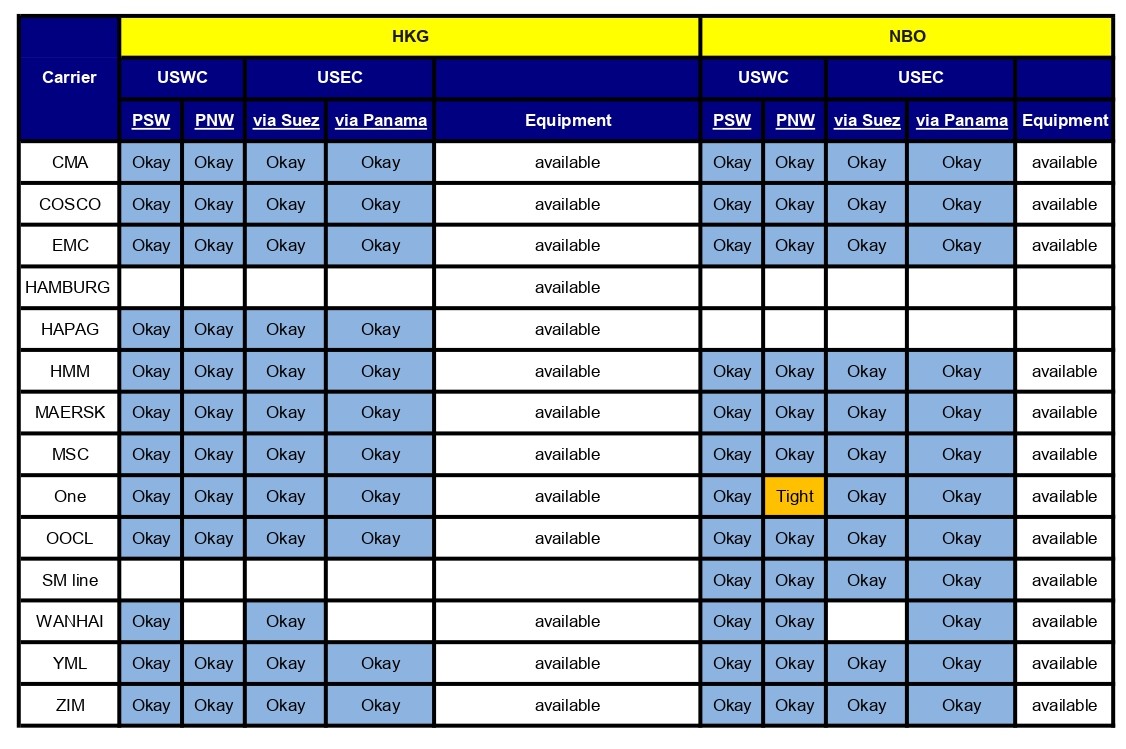
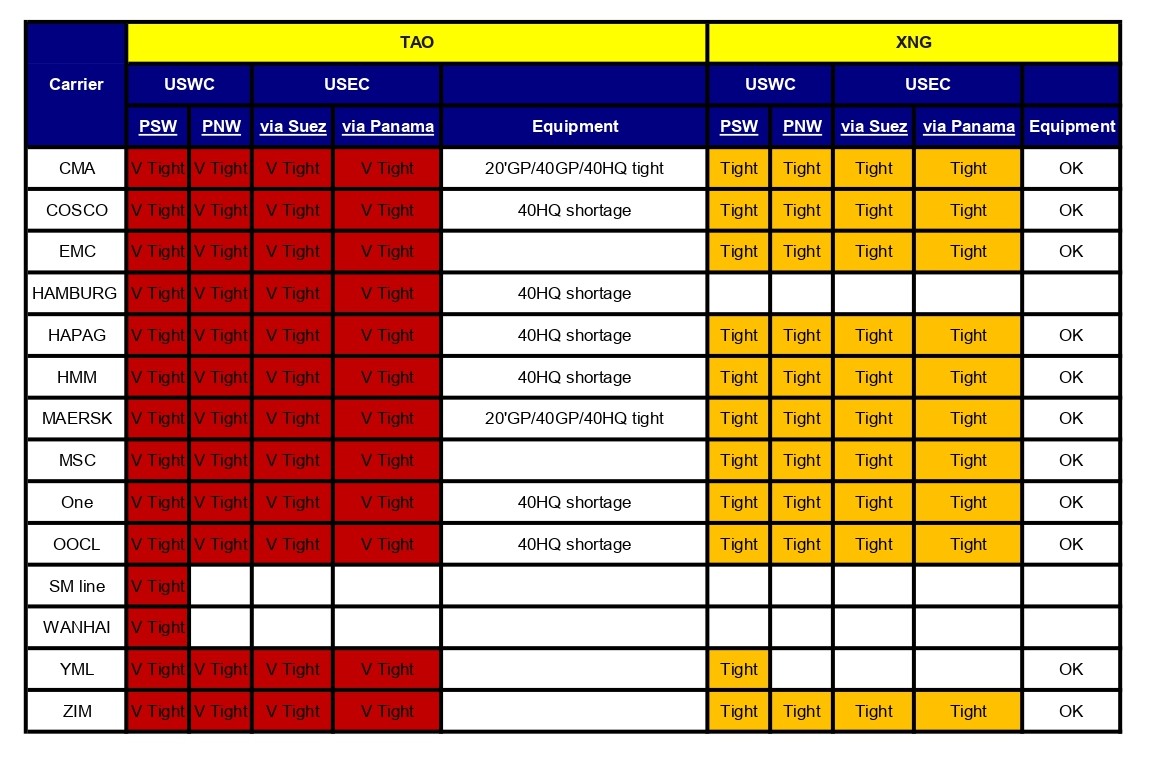
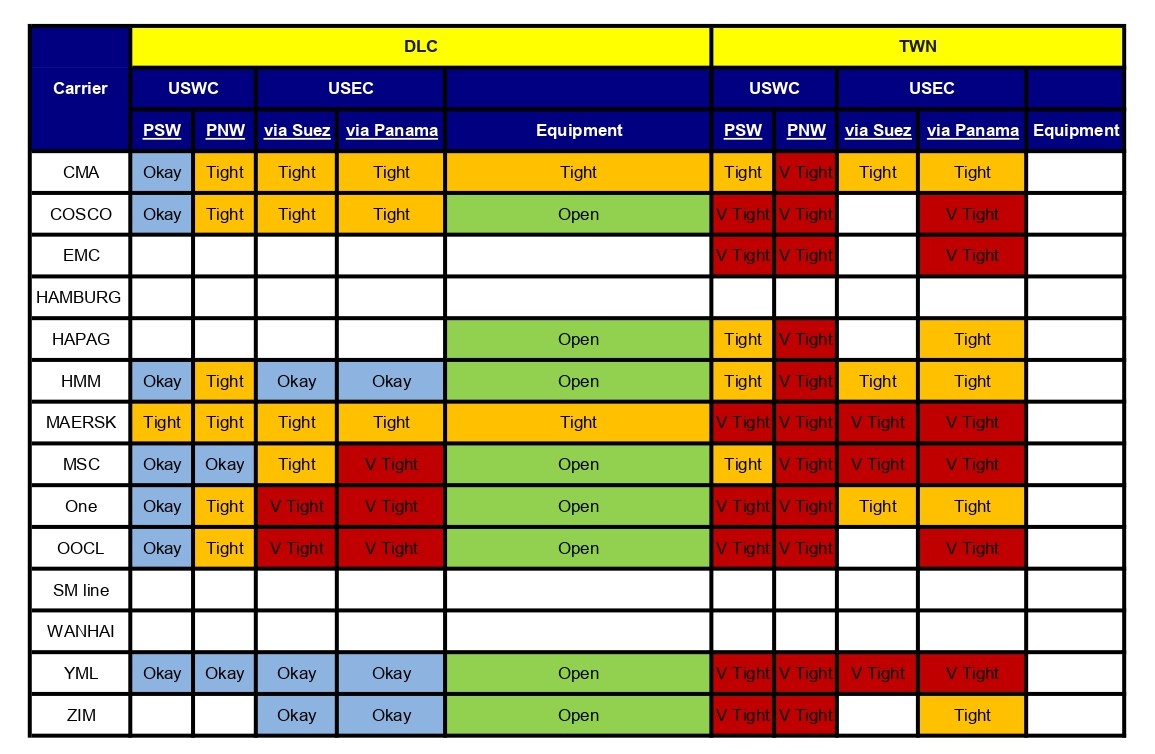
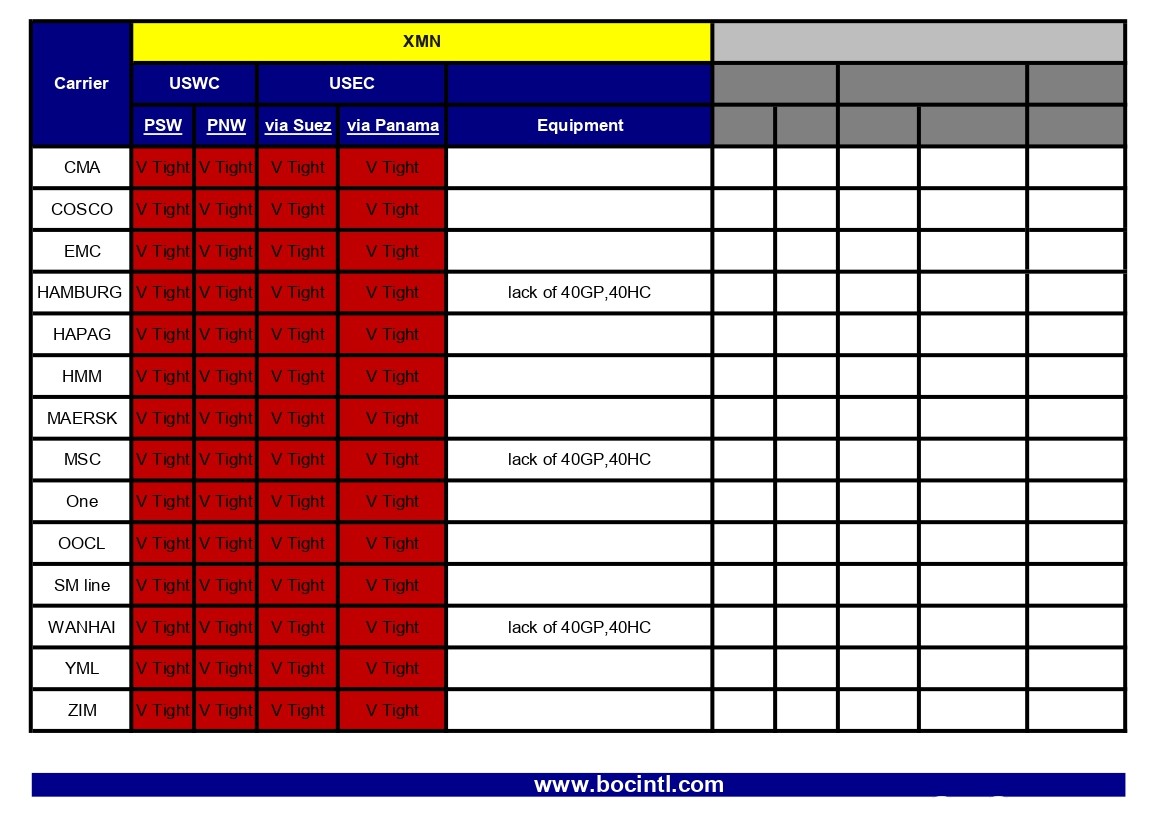
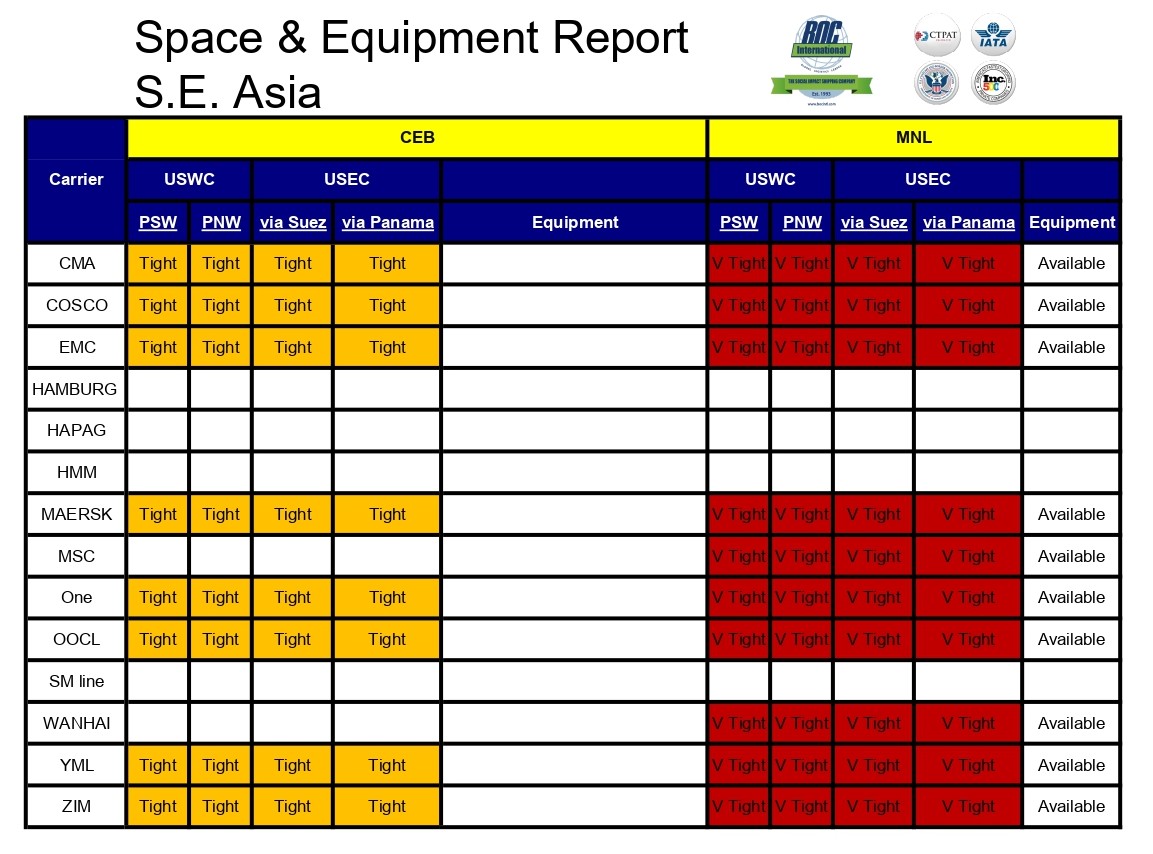
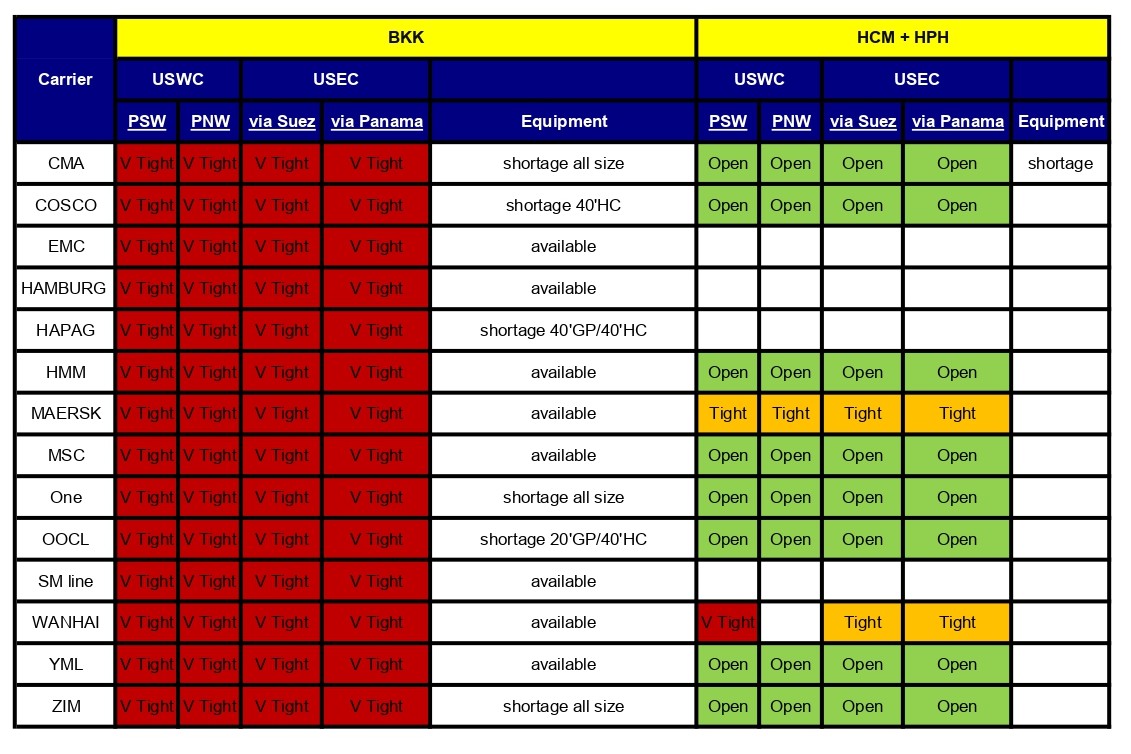
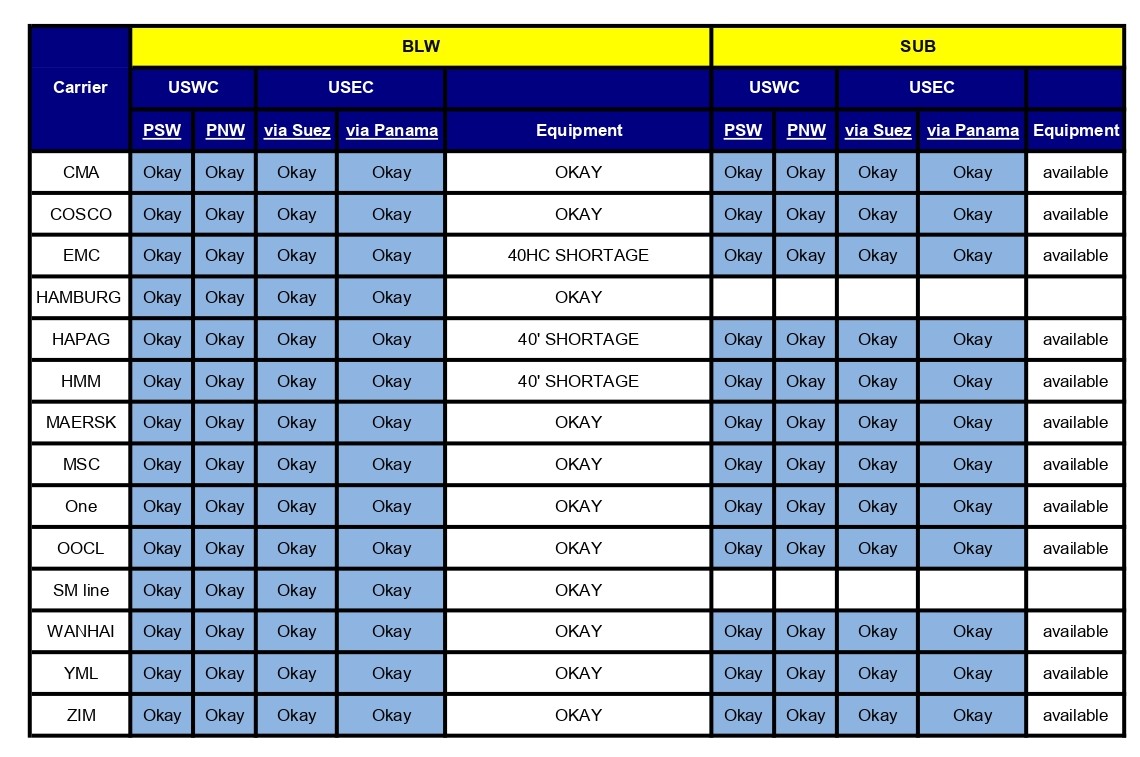
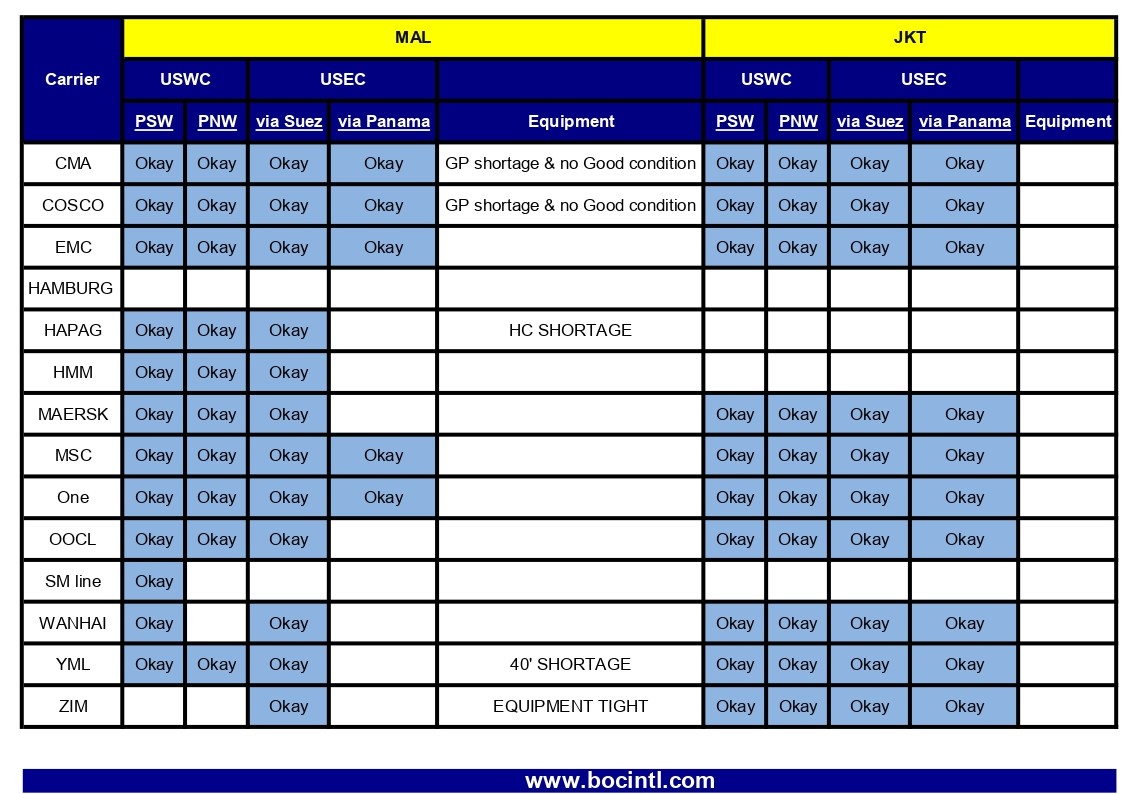
Blast # 572 Space Equipment Report effective from Mar 02 – Mar 08 2026

………………………………………………………………………………………………………………………………………………………………………………………………………………………………………….
Please find our newest Space and Equipment report, below.
Please note: regardless of the status showing on the report, please reach out to your BOC Representative to discuss existing status. Space availability changes daily, even multiple times per day. This report is just a general guideline. We will always do everything we can to help you move your freight.
………………………………………………………………………………………………………………………………………………………………………………………………………………………………………….
………………………………………………………………………………………………………………………………………………………………………………………………………………………………………….

………………………………………………………………………………………………………………………………………………………………………………………………………………………………………….
- Published in The BOC Blast
Blast #571 Three Updates Regarding Tariffs

………………………………………………………………………………………………………………………………………………………………………………………………………………………………………….
Three Updates Regarding Tariffs
………………………………………………………………………………………………………………………………………………………………………………………………………………………………………….
- Imposing Temporary Section 122 Duties at 10%
- Continued Suspension of Duty-Free de Minimis
- Ending Certain Tariff Actions
………………………………………………………………………………………………………………………………………………………………………………………………………………………………………….
1.CSMS # 67844987 – Imposing Temporary Section 122 Duties at 10%, product entered for consumption, or withdrawn from warehouse for consumption, on or after 12:01 a.m. eastern standard time on February 24, 2026, and through 12:01 a.m. eastern daylight time on July 24, 2026 (150 days) (yes, this is published as 10%, not 15%, for now).
Read full CSMS here:
https://content.govdelivery.com/bulletins/gd/USDHSCBP-40b3b7b
………………………………………………………………………………………………………………………………………………………………………………………………………………………………………….
2.CSMS # 67845486 – Continuing the Suspension of Duty-Free De Minimis Treatment for All Countries – all goods entering the United States regardless of country of origin remain ineligible for the administrative exemption from duty and certain tax at 19 U.S.C. § 1321(a)(2)(C) (“de minimis treatment”), unless they are goods covered by the exception at 50 U.S.C. 1702(b), i.e., certain donations, information/informational materials, and accompanied baggage for personal use.
Read the full Executive Order here:
3.Ending Certain Tariff Actions – the additional ad valorem duties imposed pursuant to IEEPA in Executive Order 14193, as amended; Executive Order 14194, as amended; Executive Order 14195, as amended; Executive Order 14245; Executive Order 14257, as amended; Executive Order 14323, as amended; Executive Order 14329, as amended; Executive Order 14380; and Executive Order 14382 shall no longer be in effect and, as soon as practicable, shall no longer be collected.
Read the complete Executive Order here:
https://www.whitehouse.gov/presidential-actions/2026/02/ending-certain-tariff-actions
………………………………………………………………………………………………………………………………………………………………………………………………………………………………………….
- Published in The BOC Blast
Blast #570 Ending Collection of International Emergency Economic Powers Act Duties

………………………………………………………………………………………………………………………………………………………………………………………………………………………………………….
CSMS # 67834313 – Ending Collection of International
Emergency Economic Powers Act Duties
………………………………………………………………………………………………………………………………………………………………………………………………………………………………………….
The purpose of this message is to provide guidance regarding the February 20, 2026 Executive Order (EO), “Ending Certain Tariff Actions,” that terminates the collection of the additional ad valorem duties imposed pursuant to the International Emergency Economic Powers Act (IEEPA).
GUIDANCE
ENDING IEEPA TARIFF COLLECTION
Duties imposed pursuant to IEEPA under the following presidential actions, including all modifications and amendments, will no longer be in effect and will no longer be collected for goods entered for consumption or withdrawn from warehouse for consumption, on or after 12:00 a.m. eastern time on February 24, 2026:
- Executive Order 14193, Imposing Duties To Address the Flow of Illicit Drugs Across Our Northern Border, 90 Fed. Reg. 9113 (Feb. 1, 2025), as amended;
- Executive Order 14194, Imposing Duties To Address the Situation at Our Southern Border, 90 Fed. Reg. 9117 (Feb. 1, 2025), as amended;
- Executive Order 14195, Imposing Duties To Address the Synthetic Opioid Supply Chain in the People’s Republic of China, 90 Fed. Reg. 9121 (Feb. 1, 2025), as amended;
- Executive Order 14245, Imposing Tariffs on Countries Importing Venezuelan Oil; 90 Fed. Reg. 13829 (Mar. 24, 2025);
- Executive Order 14257, Regulating Imports With a Reciprocal Tariff To Rectify Trade Practices That Contribute to Large and Persistent Annual United States Goods Trade Deficits, 90 Fed. Reg. 15041 (Apr. 2, 2025), as amended;
- Executive Order 14323, Addressing Threats to the United States by the Government of Brazil, 90 Fed. Reg. 37739 (July 30, 2025); and
- Executive Order 14329, Addressing Threats to the United States by the Government of the Russian Federation, 90 Fed. Reg. 38701 (Aug. 6, 2025), as amended.
U.S. Customs and Border Protection (CBP) will update the Automated Commercial Environment (ACE) programming, and all Harmonized Tariff Schedule of the United States (HTSUS) numbers applicable to the IEEPA tariffs will be inactive in ACE as of February 24, 2026.
This EO affects IEEPA duties only and does not affect any other duties, including duties imposed under section 232 of the Trade Expansion Act of 1962, as amended, and section 301 of the Trade Act of 1974, as amended.
CBP will provide additional guidance to the trade community through CSMS messages as appropriate.
If you encounter any errors in filing an entry summary, contact your CBP client representative or the ACE Help Desk.
Questions regarding this message should be directed to CBP’s Office of Trade Relations at traderelations@cbp.dhs.gov.
Related CSMS: 67702087, 67133044, 67045953, 66987366, 66871909, 66814923, 66749380, 66336270, 66242844, 66151866, 66146676, 66027027, 65894387, 65829726, 65807735, 65798609, 65573545, 65236645, 65236574, 65201773, 65201384, 65054354, 65054270, 65029543, 65029337, 64916414, 64859298, 64792502, 64724565, 64701128, 64687696, 64680374, 64649265, 64514918, 64336037, 64335789, 64297449, 64297292, 64299816, 64235342, 63988468
………………………………………………………………………………………………………………………………………………………………………………………………………………………………………….
- Published in The BOC Blast
Blast #569 Supreme Court Strikes Down Tariffs

………………………………………………………………………………………………………………………………………………………………………………………………………………………………………….
Supreme Court Strikes Down Tariffs
By Lawrence Hurley – nbcnews.com
………………………………………………………………………………………………………………………………………………………………………………………………………………………………………….
Key Takeaway:
The decision does not affect all of Trump’s tariffs, leaving in place ones he imposed on steel and aluminum using different laws, for example. But it upends his tariffs in two categories.
One is country-by-country or “reciprocal” tariffs, which range from 34% for China to a 10% baseline for the rest of the world.
The other is a 25% tariff Trump imposed on some goods from Canada, China and Mexico for what the administration said was their failure to curb the flow of fentanyl.
Trump could seek to reimpose the tariffs, using other laws.

………………………………………………………………………………………………………………………………………………………………………………………………………………………………………….

WASHINGTON — Delivering a major blow to President Donald Trump, the Supreme Court on Friday ruled that he exceeded his authority when imposing sweeping tariffs using a law reserved for a national emergency.
The justices, divided 6-3 held that Trump’s aggressive approach to tariffs on products entering the United States from across the world was not permitted under a 1977 law called the International Emergency Economic Powers Act (IEEPA).
The ruling was authored by Chief Justice John Roberts, who was joined by three liberal justices and two fellow conservatives, Justices Neil Gorsuch and Amy Coney Barrett, in the majority.
“The president asserts the extraordinary power to unilaterally impose tariffs of unlimited amount, duration and scope,” Roberts wrote. But the Trump administration “points to no statute” in which Congress has previously said that the language in IEEPA could apply to tariffs, he added.
As such, “we hold that IEEPA does not authorize the president to impose tariffs,” Roberts wrote.
Justices Clarence Thomas, Brett Kavanaugh and Samuel Alito dissented.
It is a rare setback for the administration at the Supreme Court, which has a 6-3 conservative majority, since Trump began his second term in January.
The decision does not affect all of Trump’s tariffs, leaving in place ones he imposed on steel and aluminum using different laws, for example. But it upends his tariffs in two categories. One is country-by-country or “reciprocal” tariffs, which range from 34% for China to a 10% baseline for the rest of the world. The other is a 25% tariff Trump imposed on some goods from Canada, China and Mexico for what the administration said was their failure to curb the flow of fentanyl.
Trump could seek to reimpose the tariffs, using other laws.
The Constitution says the power to set tariffs is assigned to Congress. But Trump used IEEPA, which does not specifically mention tariffs but allows the president to “regulate” imports and exports when he deems there to be an emergency due to an “unusual and extraordinary threat” to the nation.
Before Trump, no president had ever used that law to tariff imports. Lower courts ruled against the Trump administration in two related cases that were consolidated, with both sides asking the Supreme Court to issue a definitive ruling.
The high-stakes case put the spotlight on a court that was skeptical of President Joe Biden’s unilateral use of executive power, including his attempt to forgive billions of dollars in student loan debt. The court blocked that proposal, citing what has been called the “major questions doctrine,” which holds that Congress must explicitly authorize policies that have a major nationwide impact.
Multiple businesses sued over the tariffs, including V.O.S. Selections Inc., a wine and spirits importer, Plastic Services and Products, a pipe and fittings company, and two companies that sell educational toys. A coalition of states led by Oregon also sued.
As of the middle of December, IEEPA tariffs had raised about $130 billion, according to the latest data available from U.S. Customs and Border Protection. Trump has touted much higher numbers, up to $3 trillion, taking into account trade deals his administration has negotiated.

………………………………………………………………………………………………………………………………………………………………………………………………………………………………………….
- Published in The BOC Blast